

In a world teeming with natural wonders and vibrant life, we often overlook an indispensable treasure hidden beneath the surface—a resource that sustains our existence and prosperity: soil. Soil, the source of our food and the habitat for ecosystems, is a microcosmic marvel. Yet, it faces an unprecedented threat - soil pollution. This lurking crisis, though less publicized than climate change and air pollution, could be one of the greatest perils to our survival. To truly comprehend the depth and severity of this issue, we must dig deep into the root causes of soil pollution, much like archaeologists unravel the mysteries of ancient civilizations. Let's delve into the heart of this issue and unveil the veil of soil pollution.
Agricultural Practices and Industrial Activities: Agriculture, the backbone of our civilization, can also be a significant contributor to soil pollution. The excessive use of chemical fertilizers and pesticides, while increasing crop yields, often leaves behind harmful residues. These substances can infiltrate the soil, disrupting its natural composition and affecting both plant and animal life. The rise of industrialization has brought immense progress but not without a cost to the environment. Industrial activities, such as mining, manufacturing, and waste disposal, release a slew of pollutants into the soil. Toxic heavy metals, like lead and mercury, can persist in the soil for generations, posing a severe threat to ecosystems and human health.
Landfills and Waste Disposal: The mismanagement of solid waste is another primary cause of soil pollution. Landfills, when improperly designed or maintained, can leach hazardous chemicals and organic pollutants into the soil. These contaminants can find their way into groundwater and eventually impact both the environment and human populations living nearby.
Urbanization and Construction: Rapid urbanization leads to the destruction of natural landscapes. The construction process involves excavations and the use of materials that can release pollutants, including oil, heavy metals, and construction debris, into the soil. This compromises soil quality and can lead to long-term degradation.
Atmospheric Deposition: Air pollution plays a direct and indirect role in soil contamination. Pollutants from vehicle emissions and industrial processes can settle onto the ground as particulate matter, introducing contaminants to the soil. Acid rain, which results from air pollution, can also alter the soil's pH, making it less hospitable for plant growth.
Household Chemicals and Natural Causes: Many everyday products we use at home, such as cleaning agents, pesticides, and automotive fluids, can be hazardous to the environment. Improper disposal of these substances can lead to soil contamination. Even small quantities of such chemicals can have a cumulative effect over time. While human activities are significant contributors to soil pollution, natural events can also play a role. Volcanic eruptions and wildfires release ash and pollutants into the soil. Erosion caused by natural factors like wind and water can expose deeper soil layers to contaminants, exacerbating the issue.

X-ray Fluorescence (XRF) analysis is a critical tool for detecting and monitoring soil pollution. It plays a pivotal role in addressing soil pollution issues by offering the following key functions and roles:
1. Rapid Analysis: XRF instruments can quickly analyze the elemental composition of soil samples without the need for expensive and time-consuming chemical analysis. This helps in swiftly determining the presence of potential harmful elements in the soil, such as heavy metals, and their concentration levels.
2. Accuracy: XRF instruments provide highly accurate data on element concentrations. This is crucial for monitoring the presence of trace elements in the soil, as certain elements, even in trace amounts, can pose environmental and human health hazards.
3. Multi-Element Analysis: XRF analysis instruments can simultaneously detect multiple elements, including but not limited to lead, mercury, cadmium, arsenic, and other heavy metals. This multi-element analysis capability makes it highly useful in a wide range of soil pollution scenarios.
4. On-Site Application: XRF instruments are typically portable, allowing them to be used in the field or on-site. This means that professionals can rapidly assess potential soil pollution issues in real-time without the need to wait for laboratory analysis results.
5. Monitoring and Evaluation: XRF analysis can be used to monitor long-term changes in soil, thus assessing the effectiveness of remediation measures. This is crucial for overseeing soil pollution remediation projects and tracking improvements in soil quality.
6. Decision Support: By providing detailed information about soil composition, XRF instruments offer decision support to government agencies, environmental consultants, and land managers. This helps in determining whether land is safe for various purposes, such as agriculture, residential, or industrial use.
7. Cost Savings: XRF analysis is often more economical than traditional chemical analysis. This helps to reduce the cost of soil pollution investigations and monitoring, making it easier to facilitate necessary actions.
In conclusion, X-ray Fluorescence (XRF) analysis is a powerful tool that plays a crucial role in diagnosing, monitoring, and managing soil pollution issues. It provides rapid, accurate, and cost-effective soil analysis, contributing to the protection of the environment, human health, and sustainable land use.
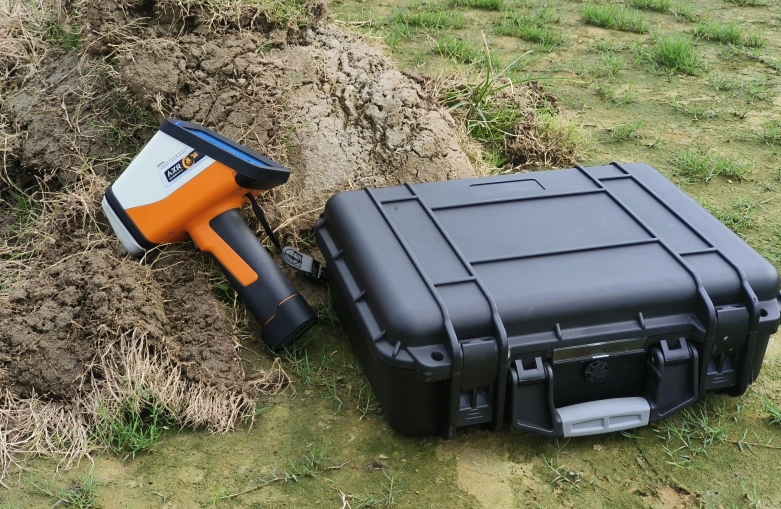
AXR Terra600 Series Handheld Soil Analyzer is an important tool for soil and sediment screening. It can detect hazardous heavy metals within seconds. Using AXR Terra600 for on-site rapid soil screening significantly reduces the number of samples that need to send to laboratory for analysis, reducing analysis costs and analysis time. And soil treatment and remediation costs can be minimized by rapidly screening and delineating contaminated areas and identifying remediation areas on-site.Beside soil and sediment screening, AXR Terra600 series analyzers are also widely used in the test of river slough pollution projects, environmental testing near pollution sources, landscaping projects, geological surveys etc. Heavy metal pollutants contained in dust, filters, film layers, lead paint and air filters etc., to conduct a comprehensive inspection and evaluation of the environment.
Traditional analytical methods usually require complicated sample preparation, and the analytical process requires high experimental conditions, and the analytical efficiency and accuracy are affected by method characteristics and sample preparation levels, which are not conducive to field investigation and analysis. Terra 600 series analyzers solve this problem well, and have the following main advantages in specific applications:
-On-site screening, easy to carry,
-Fast analysis in seconds
-No tedious training required
-Superior analytical performance
-Minimum maintenance cost
-innovative function design
-Friendly and efficient operating software
Soil pollution is a global challenge that demands immediate attention. To ensure our future and the health of the planet, we must acknowledge the root causes of soil pollution and take collective action to combat it. By unearthing the fundamental reasons behind this issue, we can pave the way for a cleaner, more sustainable Earth, where soil continues to be the cornerstone of life for generations to come.
 Your location:
