

Gold has always fascinated mankind with its dazzling luster and lasting charm. However, beyond its aesthetic appeal lies a fascinating scientific method for testing its authenticity and purity. One of the often overlooked methods involves testing with magnets. In this article, we dive into the science behind testing gold’s magnetism and explore how this method can help ensure the purity of this precious metal.
Before we delve into the magnetic testing process, it is crucial to understand the basics of gold testing. Determining the authenticity and purity of gold is critical in various industries, including jewelry, finance and electronics. Common testing methods include acid testing, electronic testing, and density measurement. Each method has a specific purpose, but magnetic testing provides a unique perspective on the properties of gold.
Unlike materials like iron or nickel, gold is not naturally magnetic. In its pure form, gold does not react to magnets. However, many gold alloys, which are combinations of gold and other metals, may exhibit magnetism to varying degrees. This property provides the basis for magnetic testing. In its pure form, it is classified as a diamagnetic material, meaning it is repelled by magnetic fields. This property makes gold different from magnetic metals like iron or nickel. However, it is important to note that gold can be alloyed with other metals, such as copper or silver, which may introduce magnetic properties to the alloy.

Gold is often alloyed with other metals to enhance its durability and change its color. The presence of these alloys may affect gold's magnetic properties. Common alloy metals include copper, silver and zinc. By using magnets, testers can identify magnetic reactions that help identify the gold's composition and estimate its purity.
The rationale behind using a magnet to test gold purity is that impurities or other metals mixed with the gold may have magnetic properties. By placing a strong magnet on a gold item, the magnetic response can provide clues about the presence of non-gold materials. If a gold item is attracted to a magnet, this indicates the presence of magnetic impurities or lower gold purity. On the other hand, if the gold item is not attracted to the magnet, this indicates that it is more likely to be composed of pure gold. The magnetic testing process is relatively simple. Here's a step-by-step guide:
Get a strong magnet: Testers use powerful neodymium magnets to evaluate gold's magnetic properties.
Watch the reaction: Place a magnet near the gold and observe if there is magnetic attraction. Pure gold should not show any magnetic response, while alloys may show varying degrees of attraction.
Analysis results: Based on the observed reactions, testers can make a preliminary assessment of the purity of the gold. Lack of magnetic response indicates higher purity, while significant attraction indicates the presence of alloy.
Although testing gold with a magnet can be a useful preliminary screening method, it has limitations. First, it cannot determine the exact purity of gold or quantify the percentage of impurities. Additionally, the magnetic properties of gold alloys can vary depending on the specific metals used in the alloy composition. Therefore, the lack of magnetic attraction does not guarantee the absence of impurities. This method needs to be used in conjunction with other testing techniques when performing a comprehensive assessment. Testing gold with magnets can be applied in various scenarios. For example, it can be used as a quick, non-destructive method to identify counterfeit gold jewelry or verify the authenticity of gold coins. It can also help differentiate between solid gold and gold-plated items. However, it is important to note that professional gold testing laboratories use more advanced and accurate methods, such as X-ray fluorescence (XRF) or fire assay, for precise gold analysis. While testing gold with a magnet can provide initial insights, seeking professional testing is key to ensuring accurate and reliable results. Professional gold testing laboratories have advanced equipment and technology to determine the exact purity of gold, detect minute impurities, and provide comprehensive analysis reports. When dealing with an important investment or high-value gold item, professional testing ensures confidence and removes any doubts about the authenticity and quality of the gold.
XRF testing (X-ray fluorescence testing) and magnetic gold testing are two different methods used to evaluate the quality and composition of gold. Each of them has some advantages and characteristics. The following are the advantages of XRF testing compared to magnetic gold testing
XRF detection: XRF technology can provide more comprehensive elemental analysis. Its ability to detect a wide range of elements in gold alloys, including light and heavy elements, makes it a powerful tool capable of identifying and quantifying multiple metallic components in a sample.
Magnetic gold testing: Magnetic testing focuses on the magnetic properties of gold and is only used to detect the magnetic components in gold alloys and cannot provide detailed information about specific elements.
XRF testing: XRF is a non-destructive testing method that requires no sample sampling or handling. This means that no damage is done to the sample when evaluating gold jewelry, gold bars or other forms of gold.
Magnetic Gold Testing: Magnetic testing is also generally non-destructive, but in some cases it may be necessary to apply a magnetic field to the sample, which may slightly affect some gold jewelry.
XRF testing: XRF is often able to provide fast, immediate test results, making it useful in real-time situations where rapid screening and analysis is required.
Magnetic gold testing: Magnetic testing is also relatively quick, but may not be as fast as XRF, especially if more detailed analysis is required.
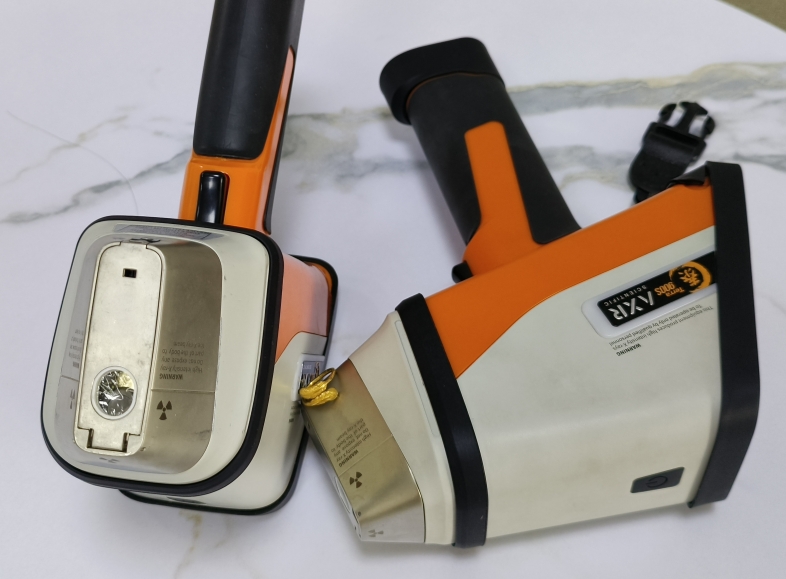
XRF detection: XRF can provide relatively accurate quantitative analysis, allowing the determination of the content percentage of each element. This is important for applications that require more precise knowledge of the content of each element in a gold alloy.
Magnetic gold testing: Magnetic testing is primarily used for preliminary qualitative analysis and can identify the presence of magnetic alloys, but does not provide accurate elemental percentages.
Taken together, XRF testing has the advantage of providing more comprehensive and detailed elemental analysis, and is particularly suitable for applications that require a high degree of accuracy and comprehensiveness. Magnetic gold testing is more suitable for rapid preliminary quality assessment, especially during field testing or preliminary screening. Choosing the appropriate method depends on the specific testing needs and application context.
AXR AURORA Benchtop Gold analyzer offers a rapid and remarkably precise method for assessing karat or gold content, serving quality control, pricing, and practical utilization needs. It empowers users to conduct an immediate, cost-efficient, and entirely nondestructive examination to ascertain gold content and authenticate alloy composition.Beyond gold, the device delivers exceptional performance for various other valuable metals of significance. The analyzers are equipped with a comprehensive precious metals suite encompassing elements such as Cr, Mn, Fe, Co, Ni, Cu, Zn, Ir, Pt, Au, Rh, Ru, Pb, Bi, Zr, Pd, Ag, Sn, Sb, Cd, In, Ga, Ge, and W. ( Plus Os for SDD detector).In a matter of seconds, you can accurately measure the precise content of precious metals in jewelry, coins, and other valuable items using the AXR AURORA benchtop gold analyzer.
Beyond its glorious appearance, gold is meticulously inspected to ensure its authenticity and purity. The science of testing gold through the use of magnets gives us a unique perspective, allowing experts to discern the presence of magnetic alloys. As technology continues to advance, the integration of various testing methods helps to more accurately and reliably evaluate this precious metal, maintaining its eternal value in our world.
 Your location:
