

In the field of material analysis, the continuous advancement of technology is reshaping the landscape, providing us with new tools and methods that redefine efficiency and accuracy. One innovation of profound significance in this realm is the Portable X-ray Fluorescence (XRF) analyzer. This handheld device has swiftly gained prominence across various industries, revolutionizing the approach to material detection and analysis. In this article, we will delve into the transformative impact of Portable XRF analyzers on material analysis and explore the myriad benefits they bring.
X-ray Fluorescence (XRF) is a non-destructive analytical technique used for elemental analysis of various materials. Traditional XRF analyzers are often large and stationary, limiting their application primarily to laboratory environments. However, the emergence of Portable XRF analyzers has expanded the scope of this technology to various field settings.
These handheld devices utilize X-rays to excite the atoms in a sample, causing them to emit characteristic X-ray fluorescence. By analyzing the emitted X-rays, Portable XRF analyzers can determine the elemental composition of the detected material. This rapid and non-destructive process has proven to be a disruptive method in industries such as mining, environmental monitoring, archaeology, and metal alloy analysis.
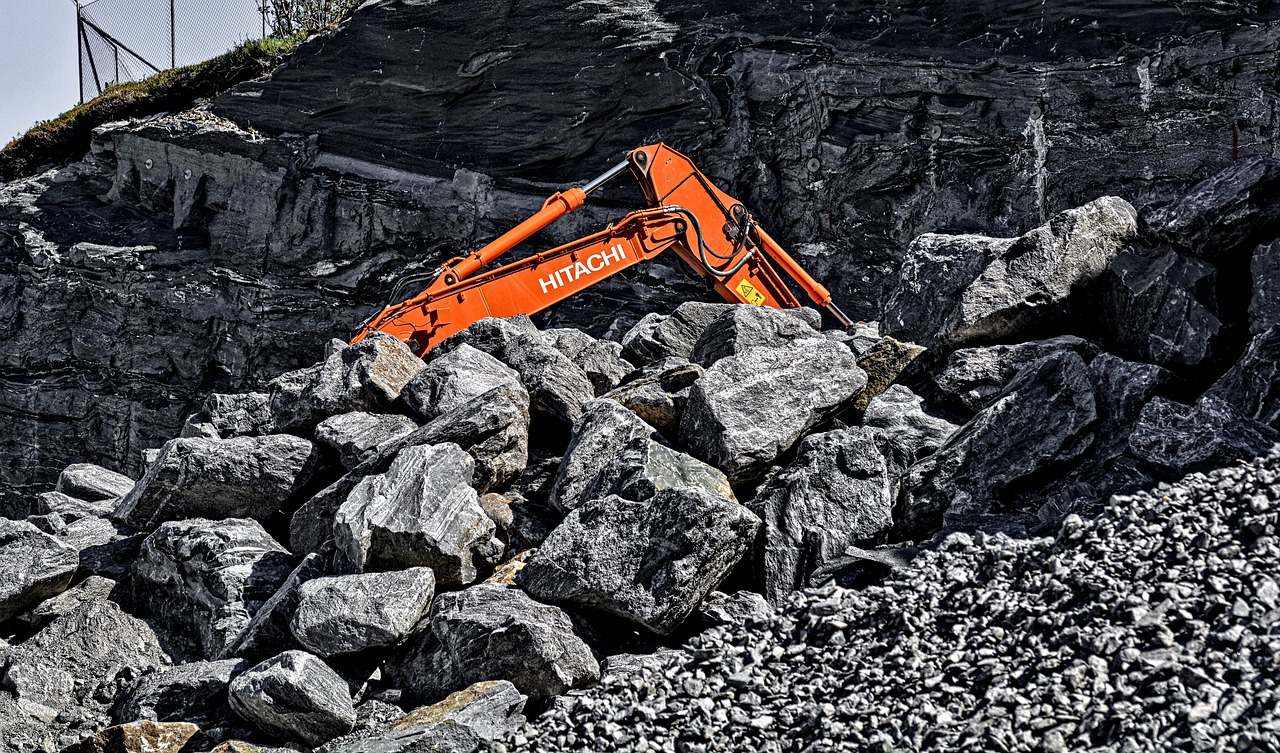
Portable XRF analyzers have become indispensable tools in the fields of mining and geology. The capability to rapidly analyze samples in the field provides real-time data on the elemental composition of rocks, ores, and soils. This information is crucial for decision-making in mining operations, aiding in ore exploration, grade control, and environmental impact assessment. The portability of these analyzers enables geologists to conduct on-site analyses, reducing the time and cost associated with sending samples to offline laboratories.
Real-time Elemental Analysis: One primary application in mining and geology is the real-time analysis of elements in rocks, ores, and soils. Traditional laboratory analyses often require samples to be sent to a lab, consuming considerable time. Portable XRF analyzers, however, can swiftly analyze samples in the field, providing real-time information on the elemental composition. This is particularly significant for ore exploration, ore body assessment, and geological research.
Grade Control: In the mining industry, the grade of ore refers to the content of valuable minerals within it. By utilizing XRF technology, the content of various elements in ore can be accurately determined, aiding mining companies in maintaining grade control. This allows companies to adjust mining strategies promptly, ensuring the production of high-grade ore.
Mineral Identification: XRF technology not only provides information on elemental composition but also facilitates the identification of minerals present in a sample. Analyzing the elements in a sample helps determine the types of minerals it contains. This is crucial for selecting optimal mining and processing methods, contributing to increased efficiency in the mining industry.
Environmental Monitoring: Beyond its application in the mining process, XRF technology is also applicable to environmental monitoring. Analyzing samples of soil and rocks helps identify and monitor hazardous elements in the environment, supporting assessments of the environmental impact of mining activities.
Geological Exploration: Portable XRF analyzers play a crucial role in geological exploration. Exploration teams can directly analyze samples in the field, quickly understanding the composition and properties of underground mineral bodies. This aids in determining the potential value of exploration areas and provides robust support for further exploration efforts.
Reduction of Laboratory Costs: Utilizing portable XRF analyzers for on-site analysis not only improves efficiency but also significantly reduces the costs associated with laboratory analyses. Minimizing the time for sample transportation and laboratory testing allows mining companies to make decisions more rapidly, enhancing overall production efficiency.
AXR Scientific Terra Handheld XRF allows you to directly make on-site geochemical analysis of mine face, drill core or prepared samples. On-site real time analysis with the AXR Scientific Terra handheld XRF mining analyzer will boost productivity by reducing turnaround times for results from days to seconds comparing to laboratory analysis. The Terra Series allows fast real-time surveys to quickly define ore boundaries and identify areas of highest potential profit.The Terra series of handheld mining analyzers provide a relatively complete solution for the quality monitoring and safety compliance testing. The instrument is equipped with high-performance X-ray tube and Si-Pin/SDD detector to provide users with fast and accurate element concentration analysis. In addition, an optional large-area silicon drift detector is provided to further improve instrument resolution and reduce analysis time.
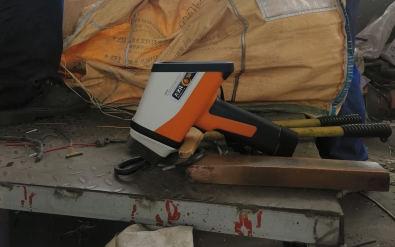
X-ray Fluorescence (XRF) technology finds extensive application in the analysis of metal alloys, providing efficient and accurate analytical tools for manufacturing, metal processing, and related industries.
Rapid Alloy Composition Testing: Portable XRF analyzers can swiftly analyze metal alloys within seconds, accurately determining the content of each element in the alloy. This is crucial for quality control and inspection processes on production lines, ensuring that metal alloys meet specifications and design requirements.
Verification of Alloy Quality and Consistency: In manufacturing and metal processing, the quality and consistency of alloys are paramount for the performance of the final product. XRF technology can be employed to verify whether the composition of alloys aligns with expectations, ensuring consistency across each batch of material and enhancing overall product quality.
Alloy Identification and Sorting: For mixed or unmarked metal alloys, XRF analysis provides a rapid method to determine their composition. This is particularly valuable in the recycling of metals and waste processing, aiding in the classification of materials and effective resource recovery.
Non-Destructive Analysis: In contrast to traditional wet chemical analysis methods, XRF analysis is a non-destructive technique. This means that the sample is not damaged during the analysis process, allowing for continuous testing of a limited number of samples without the need for extensive sample preparation.
Metal Alloy Identification: XRF technology is capable of identifying the composition of unknown metal alloys. This proves highly beneficial in recycling operations, enabling operators to quickly identify the types of metals present in waste materials and effectively manage resources.
Quality Control and Compliance: Industries such as manufacturing require assurance that their products comply with industry standards and regulations. XRF analysis can be used to monitor the composition of alloys, ensuring that products meet quality standards and regulatory requirements.
Time and Cost Savings: Traditional wet chemical analysis methods often involve lengthy procedures in the laboratory. In contrast, the speed and portability of XRF technology make the analysis process swift and cost-effective.
In summary, the application of XRF technology in mining and geology provides researchers and mining professionals with powerful tools, enabling them to comprehensively and in real-time understand the composition of underground resources. This, in turn, allows for more effective management and optimization of mining activities. The use of XRF technology in the analysis of metal alloys provides the manufacturing industry with a flexible and efficient tool to ensure the quality, consistency, and compliance of metal products. The widespread application of this non-destructive analytical method in modern industry contributes to increased production efficiency, cost reduction, and the assurance of final product quality.
The rise of portable XRF analyzers signifies a significant milestone in material analysis. These handheld devices offer unparalleled flexibility, allowing various industries to conduct on-site analyses. From mining and environmental monitoring to archaeology and metal alloy analysis, portable XRF analyzers are transforming the way we explore and understand materials. With ongoing technological developments, we can anticipate further improvements and applications, solidifying the position of portable XRF analyzers in the field of material analysis.
 Your location:
