

In the ever-evolving field of materials analysis, technology plays a vital role in advancing our understanding of the world around us. A landmark innovation is handheld X ray fluorescence (HHXRF). This portable technology has revolutionized the way researchers, scientists, and professionals analyze materials, providing unparalleled convenience and accuracy in a compact device. In this article, we delve into the fascinating world of portable precision and explore how HHXRF is reshaping materials analysis.
X-ray fluorescence (XRF) is a non-destructive technique used to analyze the elemental composition of materials. The technique is based on the principle that when a sample is exposed to high-energy X-ray radiation, the atoms within it absorb these X-rays and are excited to high energy levels. These excited atoms then return to lower energy levels by emitting fluorescent X-rays. The energy and intensity of these fluorescent X-rays are directly proportional to the type and number of atoms. XRF analysis usually involves two types: X-ray Fluorescence and alpha X-ray Fluorescence. In radiofluorescence, X-rays are used to excite the sample, while in alpha-ray fluorescence, alpha particles are used.
The advent of handheld X-ray fluorescence sparked a revolution in materials analysis. Gone are the days when researchers were tethered to bulky equipment in the lab. HHXRF equipment is compact, lightweight and easy to carry, allowing users to easily conduct on-site analysis. This new level of portability expands the scope of materials analysis, allowing professionals to collect data in real time in diverse environments, from archaeological digs to industrial plants.
XRF technology has many application fields, including geology, metallurgy, environmental science, archaeology, manufacturing, pharmacy, etc. Its non-destructive nature means that detailed information about the composition of the sample can be obtained without damaging it, making it an important tool in the field of materials analysis and quality control. In recent years, the emergence of handheld XRF equipment has made the technology more flexible and portable, facilitating on-site analysis. The versatility of HHXRF makes it a valuable asset in a variety of industries. In archeology, researchers can quickly analyze artifacts and unearth hidden insights without the need for time-consuming laboratory procedures. In mining and exploration, geologists can assess soil and rock composition in the field, streamlining the decision-making process. Additionally, the technology has found applications in environmental monitoring, alloy verification in manufacturing, and quality control in industries ranging from electronics to pharmaceuticals.
The new generation Terra980 handheld XRF coating thickness analyzer uses high-resolution Si-PIN (or SDD silicon drift detector), with industry-leading measurement accuracy and measurement results. Whether it is quality control of coating thickness during the production process, or random inspection and full inspection during incoming material inspection and material performance inspection, Terra980 can meet your inspection needs. Terra980 analyzes coating thickness with the advantages of fast, accurate, non-destructive, non-contact, multi-layer alloy measurement, high efficiency and high reproducibility, which can help users achieve product quality management and save costs. Achieve second-level detection speed of coating thickness and composition analysis, small size, easy to carry; using imported ceramic package micro X-ray source and high-performance semiconductor detector to effectively improve test accuracy; intuitive user interface, almost no training required, equipped with large size High-definition touch display; fully automatic intelligent control, one-click measurement; can quickly analyze the thickness and composition of the coating when the composition of the coating is unknown, and easily standardize the coating analysis for standard coatings; durable, IP54 compliant, waterproof and vibration-proof, and Work in harsh environments.
X-ray fluorescence (XRF) is a powerful tool for analyzing the elemental composition of materials, but there are still factors to consider when it comes to ensuring data accuracy.
Calibration: The accuracy of XRF equipment is closely related to its calibration process. Calibration is the process of calibrating an instrument so that it can accurately identify and quantify different elements. Accurate calibration is the key to ensuring the accuracy of XRF data.
Sample preparation: The physical state and preparation method of the sample have an impact on the XRF analysis results. Samples should be homogeneous and, where possible, should be similar to standard reference materials to ensure accurate comparisons.
Matrix effects: Different sample matrices (for example, different matrix materials) may cause changes in the XRF signal. This matrix effect requires correction during analysis to ensure accurate elemental measurements.
Sample thickness: The thickness of the sample also affects the XRF analysis results. Samples that are too thick or too thin can cause signal attenuation or enhancement, affecting data accuracy.
Measurement range of elements: The sensitivity and accuracy of XRF can vary between different elements. Some elements may be easily measured, while others may require greater instrument sensitivity.
Environmental conditions: Environmental conditions during analysis, such as temperature and humidity, may also have some impact on XRF instrument performance. Some equipment may require operation under specific environmental conditions to ensure accuracy.
Although XRF is a powerful tool, users should be aware of these potential influencing factors when using it and, where possible, take appropriate steps to correct or reduce these effects to ensure accurate and reliable analytical results. . In addition, regular instrument maintenance and calibration are also important steps to maintain XRF accuracy.
The portability of HHXRF equipment not only improves accessibility but also contributes to cost-effectiveness. With on-site analysis capabilities, professionals can save on shipping costs by eliminating the need to ship multiple samples to a centralized laboratory. Additionally, real-time data collection reduces the wait time required for traditional laboratory analysis, accelerating the research and decision-making process.
Real-time analysis: XRF technology allows users to perform elemental analysis in real-time on-site, avoiding the time and expense of sending samples to a laboratory for analysis. This real-time nature can bring benefits in many applications, including mining, manufacturing, environmental monitoring and other fields.
Reduced sample preparation: Compared with traditional laboratory analysis, XRF generally does not require complex sample preparation processes. This means no significant processing of samples is required before analysis, reducing sample preparation time and labor costs.
Reduced transportation costs: Because XRF equipment is portable, professionals can perform analysis directly at the sampling point, rather than having to collect samples to a laboratory far away from the site. This reduces transportation costs, especially in fields such as field mineral exploration and archaeological research.
Fast decision-making: Real-time XRF analysis enables rapid decision-making while samples are being collected. In manufacturing, for example during alloy inspection or quality control, instant access to elemental information can help adjust production processes or make necessary corrections in a timely manner.
Reduced laboratory expenses: Although the acquisition cost of XRF equipment may be higher, in the long run, significant laboratory expenses can be saved. Reducing dependence on the laboratory, especially where frequent analysis is required, helps reduce the cost of using laboratory equipment and human resources.
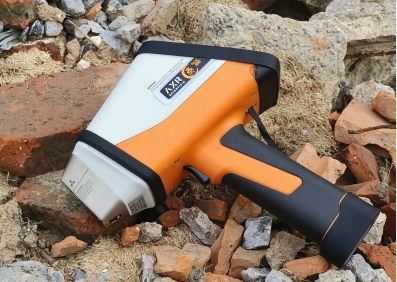
The advent of handheld X-ray fluorescence has ushered in a new era of convenience, precision and efficiency in materials analysis. The portability of these devices makes analytical tools more accessible, benefiting professionals across a wide range of industries. As technology continues to develop, the future holds exciting prospects for further miniaturization, enhanced functionality, and the possibility of wider applications of HHXRF, bringing continued change to the field of materials analysis.
 Your location:
