

In the quest for uncovering the Earth's treasures and the mysteries of the unknown, scientists and engineers have stumbled upon a remarkable instrument that unveils the depths of the world's enigmas. This instrument is the X-ray Fluorescence (XRF) mineral analyzer, a powerful and mysterious tool that not only provides scientists with a window into the depths of the Earth's crust but also equips industries with a means for quality control and resource optimization. Its mystique lies in its unique ability to reveal the composition and constitution of substances in a way previously unparalleled. However, despite its celebrated performance and indispensable nature, when it comes to selecting the XRF mineral analyzer best suited to your needs, price becomes a pivotal question that must be addressed. Thus, this article will guide you through the intricate realm of XRF mineral analyzer prices, revealing how to find the best value within budget constraints, making the journey of scientific and industrial exploration more precise and fruitful.
XRF, an abbreviation for X-ray Fluorescence, is a widely employed non-destructive analytical technique used in scientific research, industrial analysis, and quality control. XRF technology employs X-rays to excite the atoms within a sample, leading to the emission of specific-energy X-ray fluorescence. The energy and intensity of these fluorescent X-rays are dependent on the presence and concentration of various elements in the sample. By analyzing the characteristics of these fluorescent X-rays, XRF analyzers can determine the elemental composition of a sample, providing both quantitative and qualitative information about the elements present.
XRF technology finds extensive application across multiple fields, including geology, mining, metallurgy, environmental science, construction material analysis, food testing, pharmaceutical analysis, archaeology, and more. It stands as a powerful tool because it delivers accurate and reliable elemental analysis without damaging the sample. The applications of XRF analyzers help scientists and engineers better understand the composition of materials, optimize manufacturing processes, ensure product quality, and carry out tasks such as mineral exploration and environmental monitoring.
The prices of XRF mineral analyzers can be influenced by several factors, and here are some of the key considerations:
Detector Type: XRF analyzers use different detector types, such as Silicon Drift Detectors (SDD) and Proportional Counters. SDD detectors are often more sensitive and provide quicker analysis results, but they tend to be more expensive.
Elemental Range: Different XRF analyzers may cover varying elemental ranges. Some analyzers are specialized for specific elements, while others offer a broader range. Expanding the elemental coverage typically comes with higher costs.
Sample Types: Some XRF analyzers are designed for specific sample types, such as solids, liquids, or powders. Analyzing different sample types may require distinct instrument configurations, potentially affecting the price.
Instrument Size and Portability: Portable XRF analyzers are typically more expensive than their benchtop counterparts. Portable instruments are suitable for applications that require analysis in the field or at various locations, whereas benchtop models are better suited for fixed laboratory environments.
Performance and Resolution: High-performance XRF analyzers often come with higher resolution and faster analysis speeds, but these performance enhancements are usually accompanied by higher prices.
Software and Additional Features: Some XRF analyzers provide additional software and features, such as data analysis tools, report generation, and automation capabilities. These added functionalities can influence the price.
Warranty and Support: The length of the product's warranty and the post-purchase support services provided by the manufacturer can also impact the price. A longer warranty period can add to the overall value.
In summary, selecting the right XRF mineral analyzer involves careful research and evaluation, taking into account different factors that align with specific needs and budget constraints. Different applications and laboratory settings may require varying instrument types, making the price factor just one part of the purchasing decision.
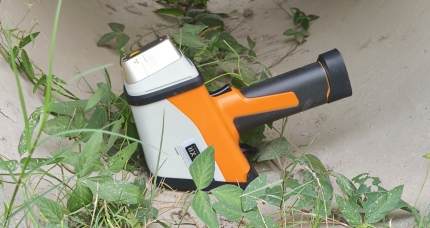
Based on the factors that affect the price of the analyzer discussed earlier, the Handheld Mining Analyzer Terra600M Series is one of the most cost-effective instruments. In terms of detectors, you can choose either High performance Si Pin detector or Optimized SDD detector. The body includes a battery, which is approximately 3.3 kilograms per unit. The body is compact and lightweight, making it easy to operate. The exception is ceramic packaged microfocus X-ray tube, Ag target tube, 50kV; The window is Kapton with anti function window design option. The software update frequency is moderate, and additional features can be provided according to customer needs, such as adding languages, remote operations, and so on. Terra600M is equipped with the capability of precise analysis of light elements, which is important for understanding sample mineralogy and critical for analyzing certain types of minerals, such as bauxite and limestone. During exploration, the Terra600M is an excellent tool for fast screening of vast areas due to its light weight and mobility.In mining, the Terra600M provides easy ore grade control and allows for quick decision-making. The analysis of ore concentrates during the enrichment process is also a simple task for the Terra600M. Both primary elements and trace elements can be accurately measured using the fundamental parameters method.Investing in the Terra600M will improve your mining operations by providing fast, accurate, and reliable on-site analysis of ore samples.
Choosing an XRF mineral analyzer that suits your needs involves a delicate balance between price and functionality. By understanding technology, factors that affect prices, and evaluating your needs, you can make wise decisions to ensure that your specific application receives the best value. Please remember that finding the perfect analyzer is not only about initial costs, but also about the long-term benefits it brings to your work and research. After careful consideration, you can confidently invest in XRF mineral analyzer to provide strong support for your analytical work.
 Your location:
