

Imagine holding a device the size of a cordless drill that can tell you, in seconds, exactly what an object is made of. Not just "metal" or "rock," but its precise chemical recipe—95% iron, 3% nickel, 2% chromium. That’s the power of a handheld XRF analyzer. While the term "X-ray fluorescence" might sound like something from a sci-fi lab, the core technology is surprisingly straightforward. Let’s break it down into plain English.
At its heart, an XRF analyzer is a detective that interrogates atoms. Every element—gold, lead, titanium, silicon—has atoms with a unique structure. The device works by exciting these atoms and then "listening" to the unique signature they emit in response.
Think of it like this:
The "Poke": The analyzer fires a safe, focused beam of primary X-rays at the sample.
The "Reaction": This energy knocks an electron out of its orbit around an atom's nucleus.
The "Signature": To restore balance, an electron from an outer shell drops in to fill the vacancy. This shift releases a tiny burst of secondary energy, a fluorescent X-ray.
The "ID": Critically, the amount of energy in this fluorescent X-ray is unique to the specific element (e.g., iron always shouts "1!" while gold always shouts "79!" in atomic energy units). The analyzer's detector catches this signal.
The "Report": A powerful processor inside the gun counts thousands of these signals, sorts them by their unique energy levels, and calculates the concentration of each element present. This all happens in seconds, and the results appear on the screen.
Historically, this kind of analysis required cutting a sample and sending it to a centralized laboratory, a process that could take days or weeks and significant cost. The genius of the handheld version is miniaturization. Advances in electronics, battery technology, and rugged design have packed that powerful X-ray tube (or radioisotope source), detector, and computer into a portable, robust tool you can carry anywhere—from a muddy excavation site to a dusty scrap yard to a busy manufacturing floor.
When you use a handheld XRF, you’re not looking at complex spectral graphs (unless you want to). The interface is designed for practicality. A typical result screen will show you:
A List of Elements: Presented in descending order of concentration (e.g., Fe: 68.5%, Cr: 19.2%, Ni: 9.1%, Mo: 2.2%).
Alloy Grade/Material Name: Based on its built-in library, it will often suggest a match (e.g., "304 Stainless Steel" or "Brass, C36000").
A Pass/Fail Indicator: For quality control, it can instantly check if the material meets a specific standard you’ve pre-programmed.
The "X-ray" part naturally raises questions. Handheld XRF analyzers are designed with multiple, redundant safety features. The X-ray beam is only generated when the device is properly positioned against a sample, with the trigger fully pressed. Built-in proximity sensors will stop emission if the gun is pointed in the air. When used according to the manufacturer's training and guidelines, the radiation exposure to the operator is extremely low and well within strict regulatory limits. Always follow the provided safety instructions.
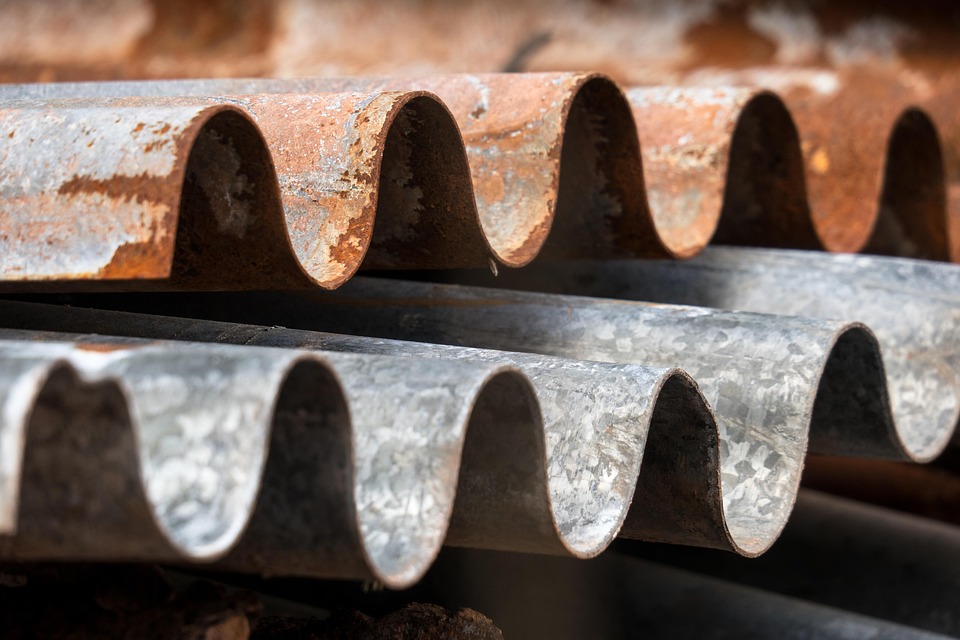
Scrap Metal & Recycling: Instantly identifying alloy types, separating stainless steels from inconel, and detecting tramp elements, turning sorting from guesswork into a precise science.
Metal Manufacturing & QA/QC: Verifying incoming raw material, checking weld chemistry, and ensuring finished products like pipes or aerospace components are made from the correct alloy.
Mining & Exploration: Providing real-time geochemical data for ore grading and mapping, helping decide where to dig next without waiting for lab assays.
Environmental Testing: Screening soil for lead paint residues or contaminated land for heavy metals like arsenic and cadmium.
Archaeology & Art Conservation: Authenticating artifacts and analyzing pigments in paintings without damaging them.
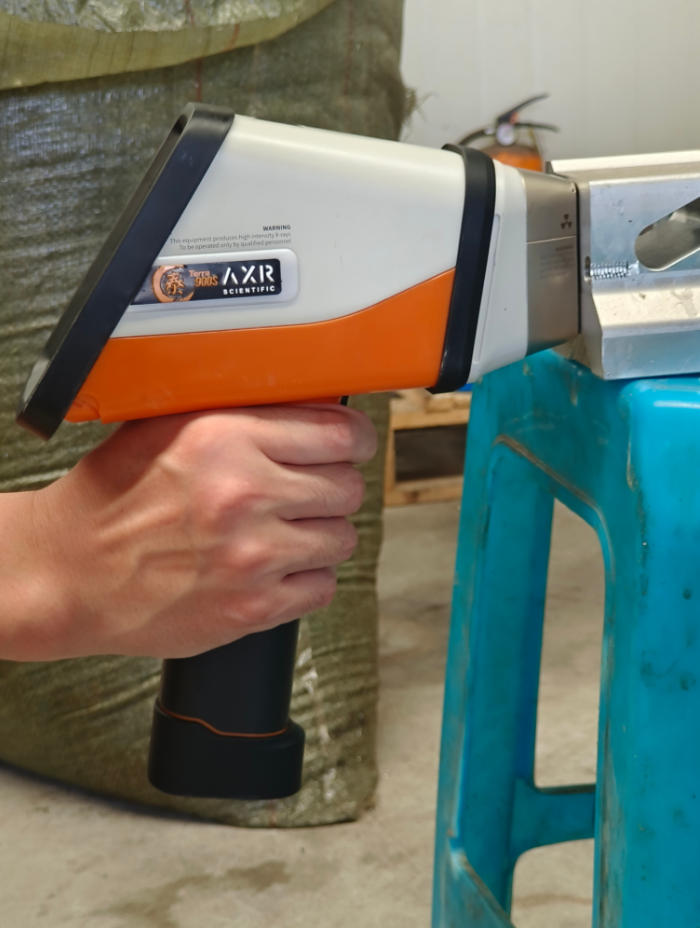
The AXR Terra900 series of handheld analyzers delivers laboratory-grade accuracy for fast, non-destructive metal analysis. With advanced electronics and algorithms, it provides results in seconds, requires minimal training or sample preparation, and handles solids, liquids, and powders effortlessly. Ideal for alloy identification, scrap sorting, quality control, and Positive Material Identification (PMI) across multiple industries.
A handheld XRF analyzer is essentially a portable elemental translator. It doesn’t see objects; it sees the unique energy signatures of the atoms that make up those objects. By translating those signatures in real-time, it empowers professionals across dozens of industries to make faster, safer, and more informed decisions—all without a lab coat or a two-week wait.
It’s not magic; it’s smart, accessible physics, packed into one of the most transformative industrial and scientific tools of the 21st century.
 Your location:
