

In the realm of material analysis, the continuous advancement of technology is pushing the boundaries once confined to laboratory settings. Portable Positive Material Identification (PMI) instruments stand at the forefront of this revolution, making real-time analysis possible in ways that were once unimaginable. This article explores the transformative impact of portable PMI machine and their role in reshaping the landscape of material analysis.
Traditionally, material analysis has been synonymous with well-equipped laboratories, where scientists and engineers could meticulously study samples under controlled conditions. While effective, this approach often faced challenges in terms of time, cost, and accessibility. However, with the advent of portable Positive Material Identification (PMI) instruments, these limitations are swiftly being overcome.
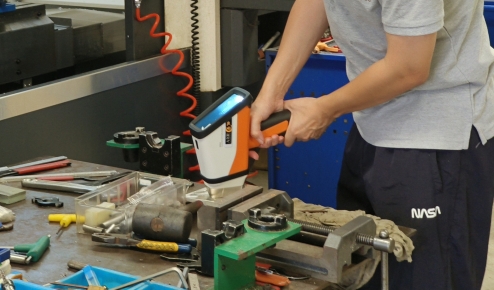
Portable PMI instruments represent a paradigm shift in material analysis, bringing the laboratory to the field. These compact and lightweight devices allow professionals to conduct on-site analyses without compromising accuracy or reliability. The capability to perform real-time material identification in different environments has opened up new possibilities across industries, such as manufacturing and construction.
One of the key strengths of portable PMI instruments lies in their versatility. These devices are equipped to analyze a wide range of materials, including metals, alloys, and even exotic materials, providing valuable insights into their composition and quality. This versatility is particularly advantageous in industries where quick decision-making and quality control are paramount.
The traditional laboratory-based approach to material analysis often involves time-consuming sample transportation, processing, and analysis steps. Portable PMI instruments eliminate the need for these steps, offering real-time results on-site. This not only enhances operational efficiency but also enables immediate corrective actions when discrepancies are identified, reducing downtime and potential risks.
While the initial investment in portable PMI technology may appear substantial, the long-term cost savings are significant. By eliminating the need for sample transportation, laboratory fees, and associated logistical challenges, organizations can achieve substantial cost reductions. Additionally, the rapid turnaround time for analyses contributes to overall project cost-effectiveness.
In regulated industries such as aerospace and nuclear, compliance with strict quality standards is non-negotiable. Portable PMI instruments provide a reliable means of ensuring compliance by offering on-the-spot verification of material quality and composition. This capability not only streamlines the compliance process but also enhances overall product quality and safety.
Despite the transformative impact of portable PMI instruments on material analysis, challenges such as calibration, precision, and data interpretation persist. Ongoing research and development efforts aim to address these challenges, with the goal of further enhancing the accuracy and reliability of on-site analyses.

Portable Positive Material Identification (PMI) instruments primarily employ two main technologies for material analysis: X-ray Fluorescence (XRF) and Laser-Induced Breakdown Spectroscopy (LIBS). These technologies enable rapid and accurate identification of the components in metals and alloys under real-world conditions.
The principle of X-ray Fluorescence (XRF) involves utilizing the characteristic X-rays of elements in a material for analysis. When a sample is exposed to an X-ray beam, internal atoms absorb energy and then emit X-rays of specific energies. In the working process, a portable XRF instrument emits an X-ray beam onto the target surface, and atoms in the sample absorb these X-rays before re-emitting specific X-rays. The instrument measures and analyzes these emitted X-rays, thereby determining the elemental composition of the sample. XRF is widely employed for the fast analysis of metals and alloys, providing accurate information about elemental content and alloy composition within seconds.
The principle of Laser-Induced Breakdown Spectroscopy (LIBS) involves using laser pulses to excite material on the sample surface into a plasma state, producing detectable spectra. These spectra contain characteristic lines of elements present in the sample. In the working process, the instrument uses laser pulses to momentarily excite the sample, forming a plasma. As the excited plasma contains spectra of the elements, the instrument analyzes and interprets these spectra to determine the elements in the sample. LIBS is suitable for the analysis of metals and alloys, with sensitivity to light elements and good spatial resolution.
Both of these technologies offer advantages such as rapid results, non-destructiveness, portability, and wide applicability. Portable PMI instruments typically provide real-time analysis results within seconds. These technologies are non-destructive, ensuring no damage to the sample surface. The instruments are designed to be compact and lightweight, facilitating easy transport to conduct on-site analyses. XRF and LIBS technologies find extensive applications in the analysis of metals, alloys, and other materials. The choice between these technologies often depends on specific application requirements, including sensitivity to elements, the need for detecting light elements, and the conditions of the actual working environment.
Corrosive thinning of piping walls and equipment due to sulfidation depends on many factors, such as materials of construction, sulfur concentration of the oil, temperature, flow rate, and H2 concentration, making it hard to predict accurately. However, one predictor of higher sulfidation rates is low silicon concentration in carbon steel components.
When exposed to hydrogen-free sulfidation corrosion conditions, carbon steels with low-silicon (<0.10%) concentration can corrode at an accelerated rate.It is estimated that 30% of high-temperature sulfidic corrosion failures are caused by low silicon concentration.Silicon analysis of this kind of equipment and piping using portable X-ray fluorescence (XRF) is an ideal choice to assist in the prevention of these incidents from occurring. Precise, accurate and fast analysis of silicon and other elements in for the crude oil and refinery field is enabled by AXR Scientific Handheld XRF Analyzer Terra900S.Terra900S series analyzers provide a relatively complete solution for the composition analysis and reliability identification of alloy materials. The instrument is equipped with a high-performance X-ray tube and SDD detector to provide users with fast and accurate element concentration analysis; an optional large-area silicon drift detector is provided to further improve the resolution of the instrument and reduce the time required for analysis. And it has proved that Terra900S is the suitable solution for analysis of silicon in steel to prevent sulfidic corrosion failures.
The emergence of portable PMI instruments has opened a new era in the field of material analysis, surpassing the limitations of traditional laboratories. Conducting on-site analysis while maintaining speed, accuracy, and versatility is changing the industry and redefining best practices. With the continuous development of technology, the impact of portable PMI instruments on material analysis is expected to further grow, providing unprecedented insights and opportunities for innovation in various fields.
 Your location:
