

In the fields of analytical chemistry and materials science, the continuous advancement of technology incessantly pushes the boundaries of what we can achieve. One revolutionary innovation in this context is the portable X-ray Fluorescence (XRF) scanner. Traditionally confined to laboratory settings, XRF technology has now liberated itself from the constraints of the lab, bestowing upon researchers, archaeologists, geologists, and various professionals the capability to conduct real-time analyses in the field. In the realm of scientific analysis, laboratories have historically served as the traditional venues for in-depth research and experiments. However, technological progress has paved the way for portable X-ray Fluorescence (XRF) scanners, enabling researchers to break free from the limitations of the laboratory and empowering them with the ability to perform analyses on-site. This article delves into the transformative power of portable XRF scanners and their various applications beyond the laboratory.
XRF technology is based on the principles of X-ray fluorescence, a phenomenon that occurs when a substance is exposed to high-energy X-rays. This interaction triggers the emission of characteristic X-rays, which can be detected and analyzed to determine the elemental composition of the substance. The revolutionary aspect of portable XRF scanners lies in their compact size, portability, and user-friendly design, enabling professionals to conduct real-time analyses directly in the field. Portable XRF scanners are devices with small dimensions and light weights, yet they possess significant analytical capabilities. These portable instruments can be easily transported to remote areas, allowing researchers to analyze samples on-site without the need to transport them back to the laboratory. Whether studying geological structures, evaluating environmental pollution, or conducting archaeological excavations, portable XRF scanners provide unparalleled convenience and efficiency in field applications.
One key advantage of portable XRF scanners is their ability to provide real-time elemental analysis. By emitting X-rays onto a sample, these scanners can detect and quantify the elements present in the sample within seconds. This capability enables researchers to make immediate decisions based on the composition of the analyzed material. Whether identifying the authenticity of archaeological artifacts, evaluating the quality of building materials, or monitoring the elemental content of soil, portable XRF scanners deliver instant results, saving valuable time and resources.
Portable XRF scanners offer non-destructive analysis, meaning that samples can be analyzed without compromising or altering their integrity. This is particularly advantageous in the field of art restoration, where preserving delicate and valuable objects is crucial. By simply placing the scanner on an object, researchers can obtain valuable information about the elemental composition without the need for destructive sampling or invasive procedures.
The versatility of portable XRF scanners extends to a wide range of field applications. In environmental monitoring, these scanners are used to analyze soil and water samples, helping researchers assess pollution levels and make informed remediation decisions. In mining and geological exploration, portable XRF scanners are employed to identify mineral reserves and determine their economic viability. Additionally, in forensic science, these scanners aid in analyzing trace evidence, providing crucial information in crime scene investigations. The applicability of portable XRF scanners makes them indispensable tools in numerous scientific disciplines.

Archaeologists have embraced portable XRF scanners as indispensable tools for on-site material analysis. These devices facilitate the rapid identification of archaeological artifacts, aiding in the determination of their composition and origin. In addition to identifying materials, portable XRF scanners help archaeologists assess the authenticity of artifacts and make informed decisions about preservation and restoration efforts.
Geologists have long relied on laboratory-based techniques to analyze rock and soil samples. However, the introduction of portable XRF scanners has transformed geological exploration. These devices enable geologists to quickly assess the elemental composition of rocks and minerals in the field, providing valuable insights into geological formations, mineral deposits, and potential environmental hazards.
In environmental science, monitoring and assessing soil and water quality are critical tasks. Portable XRF scanners play a vital role in this field, allowing environmental scientists to analyze samples directly at the sampling site. This capability is particularly beneficial in identifying pollutants, monitoring contamination levels, and making rapid decisions for remediation efforts.
Manufacturing industries, especially those involving metal production, benefit greatly from portable XRF scanners. These devices are instrumental in analyzing metal alloys for quality control, ensuring that materials meet specific composition requirements. The ability to conduct these analyses on-site minimizes downtime and enhances the efficiency of production processes.
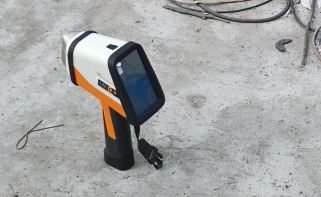
While portable XRF scanners offer numerous advantages, it's essential to acknowledge certain challenges and considerations. Understanding the limitations of the technology, such as detection limits for certain elements or the potential for sample matrix interference, is crucial for accurately interpreting results. Additionally, operator training and proper sample preparation are paramount to ensuring reliable and reproducible analyses. By recognizing these factors, researchers can maximize the advantages of portable XRF scanners in on-site applications.So, how do you choose the most suitable portable XRF instrument for your needs? Selecting the right portable XRF instrument involves considering multiple factors, including the application area, range of elements, performance requirements, sample types, portability, analysis speed, data processing and software, budget, support and training, safety standards, user feedback, and upgradability, among others. Based on these criteria, it is highly recommended to consider the various series of handheld xrf analyzer from the AXR brand. This brand offers a wide range of applications, nearly covering all the application areas mentioned earlier. It can detect a range of elements, including Ti, V, Cr, Mn, Fe, Co, Ni, Hf, Ta, Re, Cu, Zn, W, Se, Pb, Bi, Zr, Nb, Mo, Al, Pd, Ag, Sn, Sb, and more, depending on the mode. The detectors used are High-performance Si-Pin detectors or Optimized SDD detectors. These instruments are suitable for a wide variety of sample types, are compact and lightweight, highly portable, provide fast analysis (typically 15 to 30 seconds per test), have reasonable software update frequencies, offer excellent value for money, and provide product training and regular updates. User feedback rates are above 95%, making it one of the most popular brands in its category.
The emergence of portable X-ray Fluorescence (XRF) scanners signifies a paradigm shift in analytical chemistry and materials science, liberating professionals from the constraints of the laboratory. Whether unraveling the mysteries of ancient artifacts, exploring geological formations, monitoring environmental conditions, or ensuring the quality of metal alloys in manufacturing, the versatility of portable XRF scanners continues to broaden their impact. As technology advances and these devices become even more sophisticated, the future promises a further expansion of their applications, providing greater convenience for field researchers across diverse disciplines. The era of breaking free from the lab has dawned, and portable XRF scanners are leading the way. Portable XRF scanners empower researchers to conduct on-site analyses, freeing them from the confines of the laboratory. These portable analytical tools offer real-time elemental analysis, non-destructive sampling, and versatility across various scientific disciplines. Whether exploring remote geological structures, assessing environmental pollution, or preserving cultural heritage, portable XRF scanners revolutionize field applications by providing instant results and streamlining the research process. As technology continues to evolve, the capabilities and potential of portable XRF scanners will continually enhance, becoming an indispensable tool for researchers aspiring to break free from laboratory constraints and venture into new scientific frontiers.
 Your location:
