

Handheld X-ray fluorescence (XRF) analyzers are revolutionizing materials analysis across industries, providing portability and ease of use without compromising their analytical capabilities. As the demand for these devices continues to grow, it becomes critical to find a balance between functionality and cost in order to achieve optimal performance and efficiency. Portable X-ray fluorescence (XRF) analyzers are popular across industries for their portability, ease of use, and ability to perform instant elemental analysis. When considering purchasing a portable XRF analyzer, balancing price with functionality is critical to achieving optimal performance. In this article, we’ll explore key considerations when navigating handheld XRF price points to ensure you’re getting the best value for your investment.
Handheld XRF analyzers use X-ray fluorescence to identify and quantify elements present in a sample. This non-destructive technology is valuable in various industries including mining, manufacturing, environmental monitoring and archaeology. The compactness of the handheld device enables on-site analysis, reducing the need for sample transportation and laboratory testing.
Portable XRF analyzers offer a variety of features, and it's important to understand which ones are most important for your specific application. Some key features include element range, detection limits, analysis speed, software capabilities, and durability. Prioritize features based on your needs to ensure you get the most from your investment.
Assess performance trade-offs: While it is tempting to choose the most advanced and feature-rich portable XRF analyzer, it is critical to evaluate the performance trade-offs associated with higher cost. Consider whether incremental improvements in functionality and performance justify the increased investment. Sometimes, a less expensive model with slightly fewer features can still meet your requirements without compromising accuracy or reliability.
Assess specific application needs: Different industries have different needs for portable XRF analysis. For example, mining and exploration companies may be more focused on ruggedness and high detection limits, while archaeologists may be more focused on lightness and portability. Analyzing your specific application needs will help you determine the key capabilities required and allow you to focus on XRF analysis instruments that match those needs.
Consider Calibration and Maintenance Costs: In addition to the initial purchase price, it is critical to consider the long-term costs of calibration and maintenance. Some portable XRF analyzers require regular calibration and maintenance, which increases the total cost of ownership of the equipment. Consider the frequency and expense of calibration and maintenance when evaluating the total cost over the life of the equipment.
Seek vendor support and training: Investing in a portable XRF analyzer involves not only the equipment itself, but also the support and training provided by the vendor. Consider the vendor's reputation and track record with customer support, software updates, and training resources. A reliable vendor that offers comprehensive support can greatly enhance the user experience and ensure the durability of your investment.
Explore renovation or rental options: For organizations with limited budgets or short-term projects, exploring renovation or rental options is a cost-effective approach. Refurbished portable XRF analyzers often have lower prices while still providing reliable performance. Leasing options allow users to use advanced models for a specific period of time without requiring an upfront investment.
Elemental range and accuracy: Different handheld XRF analyzers offer different elemental analysis capabilities. Consider the specific elements relevant to your application and ensure the device can accurately detect and quantify them.
Detection Limit: Lower detection limits enhance the sensitivity of the analyzer. Evaluate the instrument's ability to detect trace elements, especially if your work involves identifying elements at low concentrations in complex samples.
Sample type: Analyzers may be optimized for specific sample types, such as metals, soils, or plastics. Choose equipment that matches the materials you frequently analyze to achieve the best results.
Ease of use: User-friendly interface and intuitive software contribute to the overall efficiency of the handheld XRF analyzer. Training time is reduced and operators can quickly obtain reliable results in the field.
Durability and Portability: Since handheld XRF analyzers are designed for use in the field, durability and portability are critical. Consider the ruggedness of the equipment and its ability to endure in harsh environments.
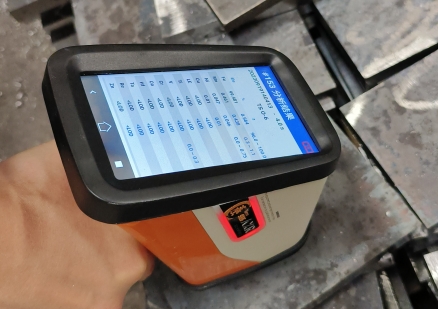
Based on the above suggestions, I strongly recommend the AXR handheld elemental analyzer. The main products promoted by AXR brand include handheld analyzers, online XRF analyzers, desktop X-ray fluorescence spectrometers, etc. The main models of handheld analyzers include handheld alloy analyzers, soil analyzers, ternary lithium battery analyzers, coating analyzers, and precious metal analyzers. Different models can be selected for different application scenarios. Taking handheld alloy analyzers as an example, since XRF analysis technology was applied in the industrial field several decades ago, it has become a validated and widely recognized metal analysis technology. The handheld XRF analyzer has become an effective tool for quality control in many metal processing and manufacturing fields. It can perform material testing work anytime and anywhere, and is easy to use and maintain. The Terra 900 series handheld alloy analyzer is an ideal tool for metal analysis in multiple fields such as quality control, brand identification, material classification, and safety precautions. Based on advanced electronic technology and unique software algorithms. The Terra 900 series can complete metal composition analysis in seconds and display alloy grades and element content on the touch screen. Users only need simple training to proficiently operate the instrument, and sample testing is not limited by location, sample shape, and size, nor does it require sample preparation. The detector adopts a high-performance Si Pin detector/SDD detector (graphene window), and the multi-channel processor uses a 4096 pixel multi-channel analyzer/80 MHz ADC digital signal processor; Through the innovative design of the AXRSMART mobile application, data can be viewed, shared, and printed in real-time, supporting functions such as sample shooting, GPS positioning, barcode scanning, and data archiving. Optional data cloud service function, which uploads detection results to a secure and encrypted cloud server for efficient statistics, querying, and analysis of large-scale analysis data.
In the world of handheld XRF analyzers, finding the balance between functionality and cost is critical to achieving optimal performance. Evaluate your specific analytical needs, the types of materials you process, and the environmental conditions in which the equipment will be used. By carefully considering these factors, you can make informed decisions that maximize the value of your investment, thereby increasing the efficiency and accuracy of your on-site materials analysis process.
 Your location:
