

In recent years, hand held spectrometers have become a powerful tool that revolutionizes the way industries operate. In today's fast-paced world, industries are constantly looking for innovative and efficient solutions to meet their analytical needs. Handheld spectrometers have become powerful tools capable of real-time, on-site analysis, providing valuable insights and driving advancements in fields ranging from agriculture to pharmaceuticals. These portable devices were once limited to laboratory settings, but today they are finding applications in different industries, enabling real-time analysis and decision-making. This article explores the expanding role of handheld spectrometers and their impact on multiple fields.
A handheld spectrometer is a compact, portable device used to measure the properties of light to enable the identification and analysis of materials. Traditionally, spectrometers are large, stationary instruments found primarily in laboratories. However, advances in technology have allowed these devices to be miniaturized without reducing their analytical capabilities. Today, handheld spectrometers are equipped with advanced technologies such as infrared spectroscopy, Raman spectroscopy, and UV-visible spectroscopy. Handheld spectrometers allow for portable and convenient analysis, eliminating the need to transport samples to the laboratory. This portability is particularly beneficial in industries such as agriculture, where soil composition, nutrient levels and plant health can be instantly analyzed to optimize crop yields. Likewise, in the pharmaceutical industry, handheld spectrometers can quickly identify and verify raw materials, helping to ensure product quality and safety.
A key advantage of handheld spectrometers is their ability to provide real-time monitoring and quality control. During the manufacturing and production process, these devices can continuously analyze materials and products to ensure consistency and identify any deviations from required specifications. This capability is particularly important in industries such as food and beverage, where rapid and accurate analysis of ingredients, contaminants and nutrient content is critical to maintaining product quality and meeting regulatory standards.

Environmental scientists and researchers are using handheld spectrometers to monitor and analyze environmental conditions. These devices help assess air and water quality, detect pollutants, and identify the presence of harmful substances. Real-time data collection is critical to environmental protection efforts and emergency response planning. Through on-site analysis of air, water and soil samples, these devices can instantly assess the presence of contaminants and contaminants. This capability is highly beneficial in industries such as environmental science, waste management and mining, where real-time analysis of environmental samples can help identify potential hazards, assess the effectiveness of remediation efforts and ensure compliance with environmental regulations.
Manufacturing industries greatly benefit from handheld spectrometers in their production processes. These devices help with quality control of raw materials and ensure consistency of product ingredients. Additionally, they help identify defects and ensure that only high-quality products reach the market. Handheld spectrometers have non-destructive testing capabilities that can identify and analyze materials without causing damage. This feature is particularly advantageous in industries such as construction, where the composition and quality of materials such as metals and alloys can be assessed on-site. It quickly identifies materials, reducing the need for time-consuming laboratory testing and facilitating efficient decision-making in areas such as quality control and structural integrity assessment.
In mining and exploration, handheld spectrometers are used to quickly identify minerals. Geologists and mining professionals use these devices in the field to assess the quality and composition of ores, streamlining the exploration process and reducing the time and resources required for traditional laboratory analysis.
Although handheld spectrometers offer many advantages, challenges such as calibration accuracy and sensitivity remain. Researchers and manufacturers are constantly working to improve these aspects and make these devices more reliable and versatile. Furthermore, the integration of artificial intelligence and machine learning techniques into spectrometer technology offers hope for further developments. The field of handheld spectrometers continues to advance, resulting in improved instrument accuracy, sensitivity, and data analysis capabilities. Modern handheld spectrometers use technologies such as Raman spectroscopy, infrared spectroscopy, and X-ray fluorescence (XRF) to expand the range of applications and improve the accuracy of materials analysis. In addition, the user-friendly interface and data management system simplify the interpretation and reporting of results, making the handheld spectrometer easy to use and efficient among professionals in various industries. The applications of handheld spectrometers are expanding into new areas. For example, in the field of forensic science, these devices can be used to quickly analyze evidence at a scene, providing valuable insights to assist investigative efforts. In agriculture, handheld spectrometers are being used to assess plant diseases, nutrient deficiencies and pesticide residues. Additionally, in the oil and gas industry, these devices help identify and characterize hydrocarbon deposits, aiding the exploration and production process.
The main products of the AXR brand include handheld analyzers, online XRF analyzers, desktop X-ray fluorescence spectrometers, etc. The main models of handheld analyzers include handheld alloy analyzers, soil analyzers, ternary lithium battery analyzers, and coating analyzers. , precious metal analyzer. Different models can be selected for different application scenarios. Taking the Terra970 handheld ternary lithium battery analyzer as an example, based on an advanced ceramic package micro-focus X-ray tube and a high-performance semiconductor detector, combined with advanced software algorithms, it can quickly and accurately detect Ni in ternary lithium batteries. , Co, Mn and other restricted element content, it is a powerful assistant for lithium battery manufacturers to carry out quality control and safety precautions, and for waste lithium battery recyclers to quickly classify. Terra970 handheld ternary lithium battery analyzer can quickly and accurately detect the content of Ni, Co, Mn and other restricted elements in ternary lithium batteries. It is an ideal tool for lithium battery manufacturers to carry out quality control and safety precautions, and to recycle used lithium batteries. A powerful assistant for merchants to quickly classify.
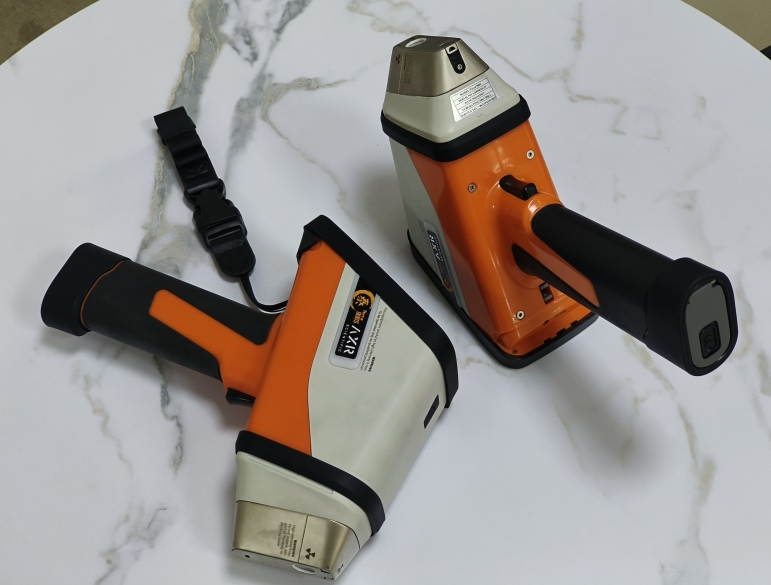
The expanding role of handheld spectrometers in a variety of industries highlights the transformative impact of portable analytical tools. Their portability, real-time analysis capabilities, and non-destructive nature make them indispensable tools in various fields. From agriculture to manufacturing, environmental monitoring to substance identification, these devices provide instant, accurate and on-the-spot analysis, driving efficiency, quality control and decision-making processes. From agriculture to healthcare, environmental monitoring to manufacturing, these devices enable professionals to make informed decisions on the fly. As technology continues to develop, the application fields of handheld spectrometers will undoubtedly expand, leading to a new era of efficiency and precision.
 Your location:
