

The fundamental technology behind an analyzer determines its capabilities, accuracy, and ideal use case.
Handheld XRF (X-ray Fluorescence): The most common portable option. It provides rapid, non-destructive elemental analysis. Best for:
Alloy grade identification (PMI - Positive Material Identification)
Scrap metal sorting
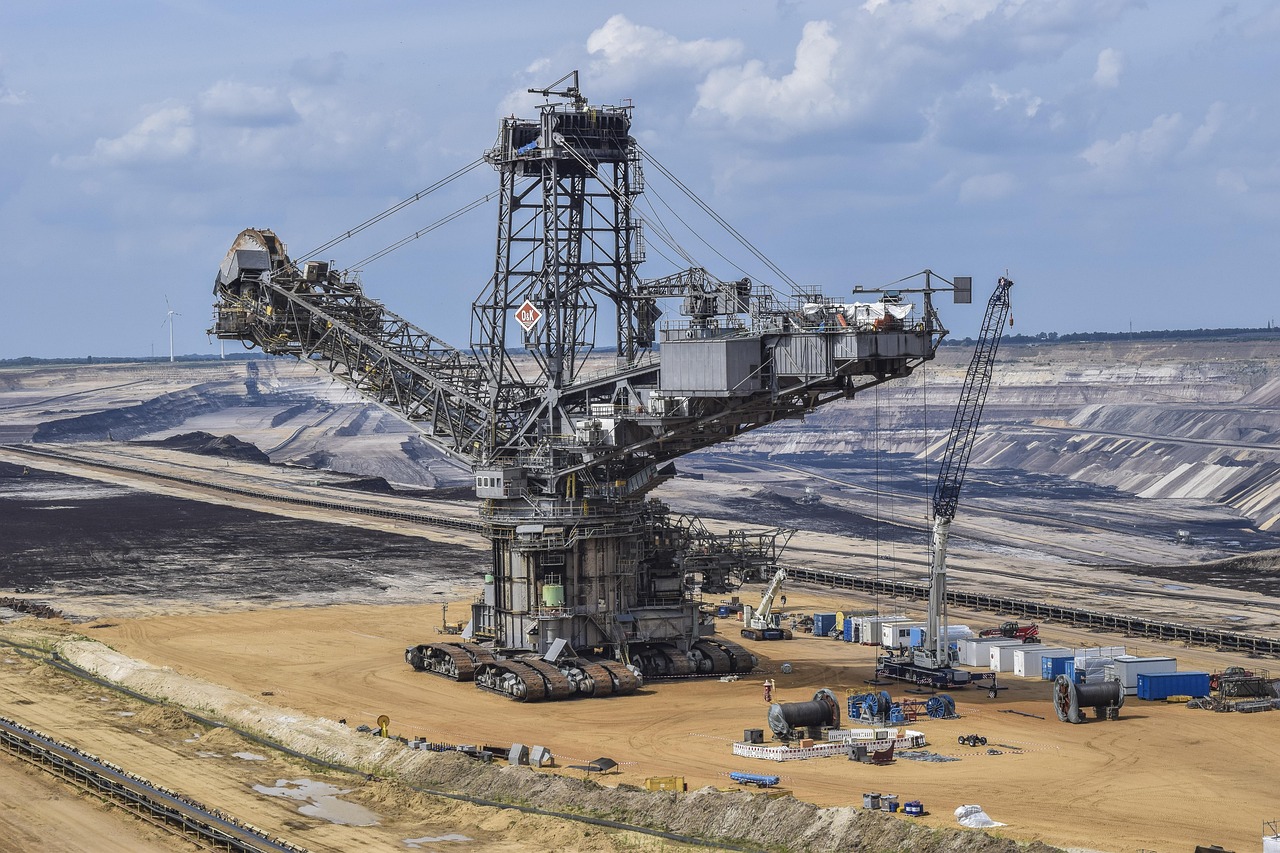
Mining and exploration
Quality control on the factory floor
OES (Optical Emission Spectroscopy): Offers lab-quality precision, especially for critical light elements like Carbon (C), Phosphorus (P), and Sulfur (S). Typically benchtop or mobile cart-based. Best for:
Precise grade verification of steels and alloys
Foundry and metal production melt control
When regulatory compliance demands highest accuracy
LIBS (Laser-Induced Breakdown Spectroscopy): An emerging technology that uses a laser. Key advantages include the ability to analyze light elements (like carbon) in a handheld format and no X-ray regulations. Best for:
Carbon analysis in steels where a handheld is required
Environments with strict X-ray restrictions
Once you've narrowed the technology, dig into these critical specs:
Elemental Range & Detection Limits: What elements do you need to detect? Ensure the analyzer can measure all elements critical to your work, from Magnesium (Mg) and Aluminum (Al) to Titanium (Ti) and Tungsten (W). Also, check the minimum detection limits (MDL) for trace elements.
Accuracy and Precision: Look for published performance data for the specific alloys you test. High precision (repeatability) is often as important as absolute accuracy for sorting and quality control.
Speed of Analysis: Time is money. How many seconds per test are required to get a reliable result? Handheld XRF units can often deliver a grade ID in 1-2 seconds.
Light Element Performance: This is a major differentiator. If you work with carbon steels, aluminum alloys, or other materials where light elements (C, Si, Mg, Al) are critical, you must choose a technology (OES or high-performance LIBS/XRF) capable of measuring them accurately.
An analyzer must survive your work environment and be easy for operators to use.
Portability & Ergonomics: For field use, consider weight, balance, and one-handed operation. A lightweight, well-designed tool reduces operator fatigue.
Durability & IP Rating: Look for a rugged housing that can withstand drops, dust, and moisture. An IP54 rating or higher (like IP65) is essential for harsh industrial environments.
User Interface & Software: The screen should be bright and readable in sunlight. Intuitive software with minimal menu diving speeds up work. Key software features include:
Large, Pre-loaded Alloy Libraries: For instant grade matching.
Clear Pass/Fail Indicators: For fast sorting decisions.
Easy Data Export: Via USB, Wi-Fi, or Bluetooth to spreadsheets or LIMS.
Answer these questions before you buy:
Primary Application: What is the main task? (Sorting scrap, PMI, melt control, geochemistry?)
Critical Elements: Which specific elements are deal-breakers? Do you need carbon analysis?
Sample Types: What are the size, shape, and surface condition of your samples?
Environment: Will it be used in a lab, factory, or outdoors in all weather?
Operators: What is the skill level of the users? How important is simplicity?
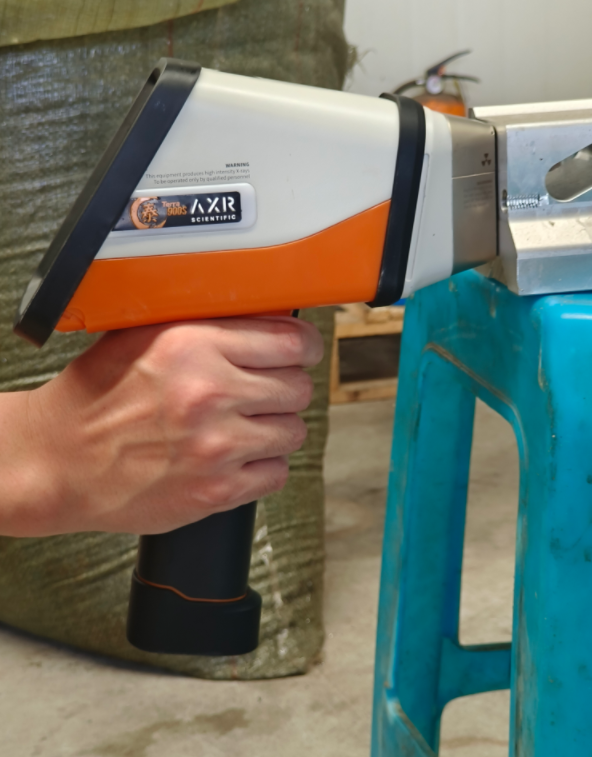
Lab-grade precision meets on-site portability in the Terra900 XRF Spectrometer. Built for durability, it detects elements from from potassium (K) to uranium (U), delivering rapid, non-destructive testing for alloy verification, scrap sorting, and contaminant screening. With an intuitive touchscreen and built-in Wi-Fi/USB connectivity, it streamlines reporting—making it an essential tool for quality control and environmental monitoring.
 Your location:
