

The metal industry has been at the forefront of technological advancements for decades, constantly seeking more efficient and precise ways to analyze and control the composition of metals. In recent years, portable metal spectrometer have emerged as powerful tools in this pursuit, offering the industry unprecedented insights and capabilities. These devices utilize the principles of spectroscopy to provide valuable data on the elemental composition of metals, making them indispensable in various applications, from quality control in manufacturing to scrap metal recycling and beyond.
Spectroscopy is the science of studying the interaction between matter and electromagnetic radiation. In the case of metal spectrometers, this involves shining light on a metal sample and measuring the wavelengths of light that are absorbed or emitted by the sample. Each element has a unique spectral fingerprint, a distinct pattern of absorption and emission lines in its spectrum. By analyzing these patterns, spectroscopy can identify the elements present in a sample and determine their concentrations.
Traditional methods of metal analysis often involve time-consuming and destructive processes, such as chemical assays or laboratory-based spectrometry, which are impractical for rapid quality control or fieldwork. Portable metal spectrometers have revolutionized the industry by offering several key advantages:
Real-time Analysis: These devices provide instant results, allowing for quick decision-making and immediate adjustments to production processes.
Non-destructive Testing: Unlike some conventional methods that require sample destruction, portable metal spectrometers can analyze materials without damaging them, preserving the integrity of valuable samples.
Portability: The compact and lightweight design of these spectrometers makes them easy to transport and use on-site, eliminating the need for samples to be transported to a centralized lab.
Versatility: Portable metal spectrometers can analyze a wide range of materials, from solid metals to powders and even liquids, making them suitable for various applications.

The applications of portable metal spectrometers in the metal industry are vast and diverse:
Quality Control: Metal manufacturers use these devices to ensure that their products meet stringent quality standards. By analyzing the elemental composition of metals in real-time, manufacturers can make necessary adjustments to maintain product consistency and quality.
Scrap Metal Recycling: Portable spectrometers help recycling facilities quickly identify and sort various metals, improving the efficiency of the recycling process and reducing waste.
Mining Exploration: In mining, these devices are used to analyze ore samples on-site, enabling geologists to make informed decisions about the viability of mining operations.
Metal Alloy Verification: Manufacturers of metal alloys can verify that the final product matches the intended composition, reducing the risk of defects and ensuring compliance with industry standards.
Environmental Monitoring: Portable metal spectrometers are employed to monitor the levels of heavy metals in water, soil, and air, aiding in environmental assessments and regulatory compliance.
Forensic Analysis: In forensic investigations, these devices can help determine the elemental composition of recovered materials, aiding in criminal investigations and metallurgical analyses.
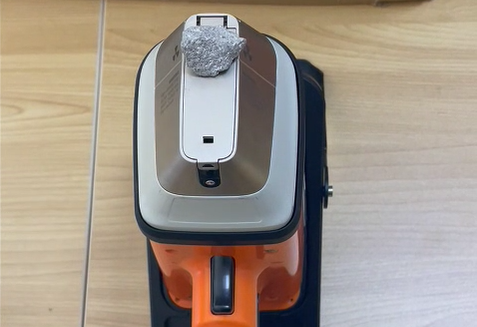
XRF uses the primary X-rays emitted by the X-ray tube to irradiate the sample, so that the sample is excited to emit characteristic X-ray fluorescence, and then through the X-ray fluorescence energy analysis and intensity measurement, the type and content of the elements in the sample can be quantitatively calculated.
XRF can directly test solid samples, and can perform non-destructive testing on samples that meet the test requirements. At the same time, the test speed is fast and the sensitivity is high. Since the handheld XRF analyzer is more portable, it is more suitable for rapid spot check and quality control of samples.
The performance of the handheld XRF analyzer Terra900 series can fully meet the requirements for rapid onsite check and quality control of denture metal raw materials.
As technology continues to advance, portable metal spectrometers are likely to become even more powerful and versatile. Miniaturization, improved data analysis algorithms, and expanded spectral libraries will enhance their accuracy and ease of use. Additionally, the integration of artificial intelligence and machine learning algorithms will enable these devices to provide deeper insights into material properties and composition.
Portable metal spectrometers have emerged as invaluable tools in the metal industry, providing rapid and accurate analysis of elemental composition without the need for destructive testing or time-consuming lab work. Their versatility and portability make them indispensable in various applications, from quality control in manufacturing to environmental monitoring. As technology continues to evolve, these devices will play an increasingly vital role in advancing the efficiency and sustainability of the metal industry. Their spectral insights are, indeed, transforming the way we understand and work with metals.
 Your location:
