

In the ever-evolving world of metals analysis, technological advances continue to bridge the gap between traditional field work and laboratory analysis. In the past, performing on-site metal analysis often meant collecting samples and transporting them to a laboratory for testing. However, with the advent of handheld X-ray fluorescence (XRF) metal analyzers, portable solutions have emerged, offering researchers and professionals the convenience of analyzing metals directly in the field. One of the innovative tools that is revolutionizing the way we detect metals is the handheld XRF (X-ray fluorescence) metal analyzer. This portable and powerful tool is changing the game, allowing professionals to transition smoothly from the field to the lab with efficiency and precision.
Traditionally, metal analysis involves the tedious process of collecting samples in the field, transporting them to a laboratory, and waiting for the results. This problem has been solved with the advent of the handheld XRF metal analyzer, a compact device designed to be taken from the lab to the field. These instruments use X-ray fluorescence technology to quickly and accurately determine the elemental composition of materials.
Portability and Accessibility: Handheld XRF analyzers are designed to be portable. They are compact, lightweight and easy to carry, allowing professionals to perform analyzes in the field without having to transport samples. Whether in the field, construction site or manufacturing plant, these devices provide real-time results to support instant decision-making. These lightweight and compact devices can be easily carried to remote locations, mining sites or construction sites to enable real-time, on-site metal analysis. By eliminating the need for sample transportation, researchers and professionals can save valuable time and resources while obtaining fast analytical results.
Versatility: Handheld XRF analyzers are versatile tools that can analyze a variety of materials, from metal alloys and soil to plastics and electronic components. This versatility makes them invaluable in industries as diverse as mining, manufacturing, archeology, and environmental science. The handheld XRF metal analyzer has multi-functional metal identification capabilities. These analyzers can detect and quantify a wide range of elements in various metal alloys, including common metals such as iron, aluminum, copper and nickel, as well as trace elements and impurities. This flexibility makes handheld XRF metal analyzers indispensable in applications such as quality control, alloy verification and materials classification.
Non-destructive analysis: Unlike traditional methods that may require destructive sampling, handheld XRF analyzers provide non-destructive analysis. This means valuable or irreplaceable samples can be analyzed without altering or damaging them, maintaining the integrity of the material. These instruments can determine the elemental composition of a metal sample in seconds without destroying or altering it. This non-destructive method is particularly important when analyzing precious artifacts, archaeological finds or when sample availability is limited. With handheld XRF analyzers, researchers can obtain valuable data while maintaining sample integrity.
Data Accuracy and Precision: These analyzers provide high levels of accuracy and precision in elemental analysis. With advanced software algorithms and calibration, users can rely on the results generated by handheld XRF devices to make critical decisions. These devices are equipped with advanced XRF technology to ensure the accuracy of elemental analysis. By delivering accurate and reliable results in the field, handheld XRF metal analyzers enable researchers and professionals to make decisions quickly and with confidence.
Mining and Exploration: In the mining industry, handheld XRF analyzers are critical for on-site exploration and determination of ore grade. Geologists and mining professionals can quickly assess the composition of geological samples, helping to make efficient decisions during exploration.
Quality Control in Manufacturing: In manufacturing, handheld XRF analyzers play a key role in assessing the composition of metal alloys during production or verifying material authenticity. These devices provide real-time data for quality assurance.
Archeology and Conservation: Archaeologists and conservationists benefit from the non-destructive properties of handheld XRF analyzers for studying artifacts and cultural heritage items. This technology helps identify material composition and provides support in the conservation and restoration of historic objects.
As technology continues to evolve, we can expect more sophisticated features in handheld XRF analyzers. Introducing artificial intelligence in data interpretation, improving detection limits and enhancing portability may be the direction of future development.
Handheld XRF analyzers have become an effective tool for quality control in many metal processing and manufacturing fields. They can conduct material testing anytime and anywhere, and are easy to use and maintain. The Terra 900 series handheld alloy analyzer is an ideal tool for metal analysis in multiple fields such as quality control, grade identification, material classification, and safety precautions. Based on advanced electronic technology and unique software algorithms. The Terra 900 Series completes metal composition analysis in seconds and displays the alloy grade and elemental content on the touch screen. Users can operate the instrument proficiently with only simple training. Sample detection is not limited by location, sample shape and size, and does not require sample preparation. Its advantages are very obvious, such as: second-level detection, non-destructive determination of metal grades, and laboratory-level analysis results; the instrument uses high-performance Si-Pin or SDD (graphene window) detectors; it adopts the basic parameter method and theoretical influence coefficient. The powerful algorithm combined with the method solves the problem of linear inconsistency in the high and low content of some elements, and improves the operating efficiency and detection accuracy; the alloy grade library covers at least 1,600 alloy grades. Ergonomic design, light weight, small size, good holding balance; tapered test head, easy to detect bends or corners; no consumables required during use; anti-puncture window design effectively protects the front end of the device; sturdy and durable, dustproof and waterproof Performance reaches IP54 standard. The unique AXRUNI structural design effectively increases light tube heat dissipation; the integrated design of engineering plastics and aluminum alloy complies with ergonomic principles. No calibration is required before use; custom curve calibration can be performed to obtain more targeted and accurate detection results when customers have special requirements.
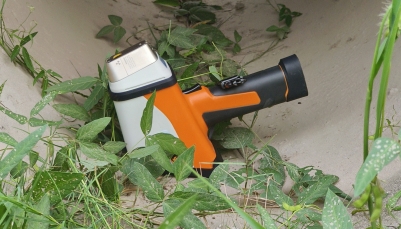
Handheld XRF metal analyzers are changing metals analysis by providing a portable solution that provides a bridge between field work and laboratory analysis. These devices provide the convenience of on-site analysis, eliminating the need for sample transportation and speeding up the decision-making process. Handheld XRF metal analyzers have become an integral part of archeology, mining, manufacturing and quality due to their portability, fast and non-destructive analysis capabilities, versatile metal identification, accuracy and reliability, and user-friendly operation and data management. An indispensable tool for researchers and professionals in fields such as control. As technology continues to advance, we can expect further improvements in handheld XRF metal analyzers to provide more efficient and accurate metal analysis in the future. Overall, handheld XRF metal analyzers have changed the way metals analysis is performed, allowing professionals to easily transition from the field to the laboratory. Their portability, versatility and efficiency make them irreplaceable tools in various industries. As we embrace these innovations, we can expect breakthroughs that will continue to shape the future of portable metals analysis.
 Your location:
