

In the field of metallurgy, the composition of metal alloys plays a crucial role in determining their properties and applications. From everyday items like tableware and jewelry to high-performance components in aerospace and medical devices, understanding the elemental composition of metal alloys is critical to manufacturing. In recent years, XRF (X-ray fluorescence) handheld analyzers have revolutionized the way we analyze and identify metal alloys, providing accurate and rapid real-time results.
Metal alloys are composed of two or more elements, at least one of which is a metal. These combinations often result in materials with enhanced properties, such as increased strength, corrosion resistance, or electrical conductivity, relative to their individual component parts. Brass, for example, is an alloy of copper and zinc and is prized for its malleability and unique golden appearance. On the other end of the spectrum, titanium alloys are known for their strength, lightness, and superior corrosion resistance.
Understanding the precise composition of metal alloys is critical to manufacturers, engineers and quality control professionals. It ensures that materials meet specific performance standards, comply with industry regulations, and are suitable for their intended application. Traditional methods of alloy analysis involve time-consuming laboratory testing, often requiring sampling for analysis.
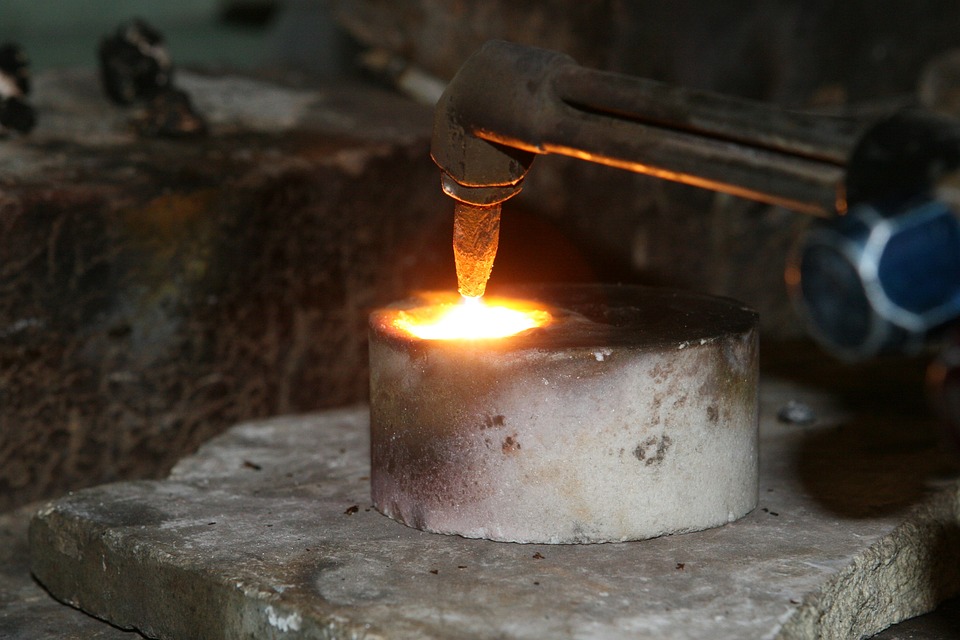
XRF handheld analyzers have become a revolutionary tool in the field of alloy analysis. These portable devices use X-ray fluorescence to determine the elemental composition of materials without the need for tedious sample preparation. The portability of these analytical instruments enables analysis to be performed in the field, reducing downtime and providing fast and reliable results. Metal alloys usually consist of two or more elements mixed in specific proportions to achieve desired properties. XRF portable analyzers excel at identifying the elemental composition of metal alloys. By measuring the intensity of the characteristic X-ray peaks emitted by different elements, the analyzer can determine the presence and percentage of each element in the alloy. This information is critical for quality control, ensuring the alloy meets required specifications and performance standards.
How XRF handheld analyzers work
XRF works on the principle that when a material is exposed to high-energy X-rays, it emits characteristic fluorescent X-rays. By measuring the energy and intensity of these emitted X-rays, analytical instruments can identify and quantify the elements present in the sample. The entire process takes just seconds, making the XRF handheld metal alloy analyzer a powerful tool for rapid alloy identification. These instruments produce characteristic fluorescent X-rays by firing X-rays at the sample. By analyzing the energy and intensity of these X-rays, the analyzer can identify and quantify the elements present in the sample. This non-destructive and fast analysis makes XRF portable analyzers an indispensable tool for studying metal alloys.
1. Portability: The main advantage of XRF handheld analyzers is their portability. Users can take these devices everywhere from manufacturing plants to construction sites to enable real-time analysis without having to transport samples to a lab.
2. Non-destructive testing: Unlike traditional methods that may require sample destruction, XRF handheld analyzers provide non-destructive testing. This is particularly valuable when working with valuable or limited quantities of materials.
3. Versatility: XRF analyzers are versatile and can analyze a variety of metals and alloys. Whether identifying stainless steel, aluminum alloys, or exotic materials like titanium, XRF analyzers provide accurate and comprehensive results.
4. User-friendly interface: Modern XRF handheld analyzers come with user-friendly interface, making them suitable for various professionals. Results are usually displayed immediately and operators require minimal training.
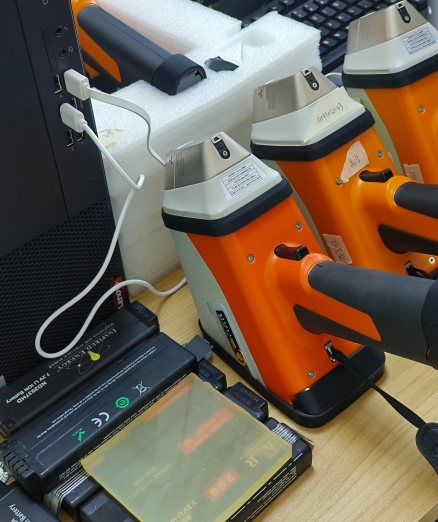
Applications for XRF handheld analyzers cover various industries.
1. Manufacturing: In manufacturing, XRF analyzers ensure that materials used in production meet specified standards, improving product quality. With the increase in counterfeit products on the market, it is important to verify the authenticity of metal alloys. XRF portable analyzers play a key role in this process by quickly and accurately verifying the alloy's authenticity. By comparing the composition of the test sample to known standards, the analyzer can confirm whether the alloy matches the expected composition. This helps prevent fraud, ensures authentic materials are used, and maintains the integrity of the supply chain.
2. Metal scrap recycling: Scrap recycling sites use XRF analyzers to quickly identify and classify different metal alloys to optimize the recycling process. XRF portable analyzers are valuable tools for materials research and development. Scientists and engineers can use these instruments to analyze the composition of different metal alloys to understand the relationship between alloy composition, microstructure and properties. This knowledge helps develop new alloys with improved properties, such as increased strength, corrosion resistance or heat resistance. XRF analysis guides innovation in alloys used in various industries including automotive, aerospace, electronics and more.
3. Construction: Construction professionals use XRF analyzers to verify the composition of structural components and ensure they meet safety and durability requirements. XRF portable analyzers are widely used in various industries. In manufacturing, these instruments ensure quality control of metal parts and prevent the use of inferior or wrong alloys. In the recycling field, they can identify and classify different metal alloys, promoting efficient and sustainable recycling processes. In addition, XRF analyzers can help inspect metal products such as pipes, coatings and welds to ensure compliance with industry standards and regulatory requirements.
The Terra 900 series handheld alloy analyzer is an ideal tool for metal analysis in multiple fields such as quality control, grade identification, material classification, and safety precautions. Based on advanced electronic technology and unique software algorithms. The Terra 900 Series completes metal composition analysis in seconds and displays the alloy grade and elemental content on the touch screen. Users can operate the instrument proficiently with only simple training. Sample detection is not limited by location, sample shape and size, and does not require sample preparation. The excitation source is a ceramic packaged microfocus X-ray tube, and the silver target is 50KV; the detector uses a high-performance Si-Pin detector/SDD detector (graphene window); the resolution is up to 140eV FWHM/129eV FWHM; kapton window, Optional carbon fiber anti-puncture window; the CPU is i.MX 8M Mini quad-core 1.8GHz, the multi-channel processor is a 4096-pixel multi-channel analyzer/80 MHz ADC digital signal processor, and the unique AXRUNI mechanism design effectively increases light Tube heat dissipation, Safety Guard induction setting, the light tube automatically shuts down when there is no sample, providing maximum safety protection, and can analyze Ti, V, Cr, Mn, Fe, Co, Ni, Hf, Ta, Re, Cu, Zn, W, Se, Pb, Bi, Zr, Nb, Mo, Al, Pd, Ag, Sn, Sb, etc.
XRF portable analyzers revolutionize the analysis of metal alloys, providing valuable insights into their composition, ensuring quality control, and driving innovation across industries. These portable devices enable fast, non-destructive analysis, allowing researchers, engineers and manufacturers to make informed decisions. From verifying the authenticity of alloys to advancing materials research and development, XRF portable analyzers have become indispensable tools for deciphering metal alloys and realizing their full potential in a variety of applications. From brass to titanium, XRF handheld analyzers have demystified the analysis of metal alloys. Their portability, speed, and accuracy make them an indispensable tool in a variety of industries. As technology continues to advance, the role of XRF handheld analyzers in ensuring the quality and performance of metal alloys will become more prominent, contributing to innovation and efficiency in various fields.
 Your location:
