

In the vast landscape of scientific instrumentation, one class of devices is emerging as a true game-changer: portable metal analyzer spectrometer. These handheld heroes are revolutionizing the way we analyze and understand the world around us. From agriculture to healthcare, from environmental monitoring to materials science, portable spectrometers are leaving an indelible mark on numerous industries. In this comprehensive article, we will explore the inner workings of portable spectrometers, delve into their diverse applications across various fields, examine their advantages over traditional spectrometry methods, and ponder the future implications of this transformative technology.
At its core, a spectrometer is a device that measures the intensity of light at different wavelengths. By analyzing the interaction of light with matter, spectrometers can provide valuable information about the chemical composition, structure, and physical properties of substances. Traditionally, spectrometers were bulky, stationary instruments found in laboratory settings. However, recent advancements in technology have led to the development of portable spectrometers, which are compact, handheld devices that offer the same analytical capabilities as their larger counterparts.
Portable spectrometers typically consist of three main components: a light source, a sample holder, and a detector. The light source emits radiation, which interacts with the sample being analyzed. The sample holder ensures that the sample is properly positioned for analysis, while the detector measures the intensity of light that is either absorbed, emitted, or scattered by the sample. By analyzing the data collected by the detector, portable spectrometers can provide valuable insights into the composition and properties of a wide range of materials.
Portable spectrometers are being used in a wide range of industries and applications, thanks to their versatility, portability, and ease of use. Some of the key areas where portable spectrometers are making a significant impact include:
Agriculture: In agriculture, portable spectrometers are being used for soil analysis, crop monitoring, and disease detection. By analyzing the nutrient levels, soil composition, and health of crops, farmers can optimize their fertilization and irrigation strategies, leading to higher yields and improved crop quality.
Materials Science: In materials science, portable spectrometers are being used for material identification and analysis. By analyzing the chemical composition and structure of materials, researchers can develop new materials with specific properties and applications.

Portable spectrometers are widely used in the metal industry. They provide convenient and efficient solutions for the detection of metal raw materials, analysis of alloy components, quality control, and monitoring of metal processing processes. The following are the main applications of portable spectrometers in the metal industry:
1. Metal alloy analysis: Portable spectrometer can be used for rapid composition analysis of metal alloys. By applying a spectrometer directly to the surface of a metal sample, the content and proportions of various elements in the alloy, including major elements, trace elements, and possible impurities, can be determined in real time. This is very important to alloy manufacturers because the accuracy of the element content in the alloy directly affects the performance and quality of the alloy.
2. Metal material identification: Portable spectrometer can be used for rapid identification of metal materials. By comparing it with standard spectra of known metals, the composition and type of the unknown metal can be determined, including the type, purity and manufacturing process of the metal. This is of great significance for metal recycling, scrap processing and quality inspection.
3. Metal quality control: In the metal manufacturing process, portable spectrometers can be used to monitor and control the quality of raw materials and finished products in real time. By performing spectral analysis on metal samples, it can be quickly determined whether its composition and content meet standard requirements, so that the production process can be adjusted in a timely manner to ensure product quality stability and consistency.
4. Metal processing process monitoring: During the metal processing process, portable spectrometers can be used to monitor the composition and properties of metal materials in real time. By performing spectral analysis on samples produced during processing, problems that may arise during processing, such as composition deviations and excessive impurity content, can be discovered in a timely manner, so that process parameters can be adjusted in a timely manner to avoid the production of defective products.
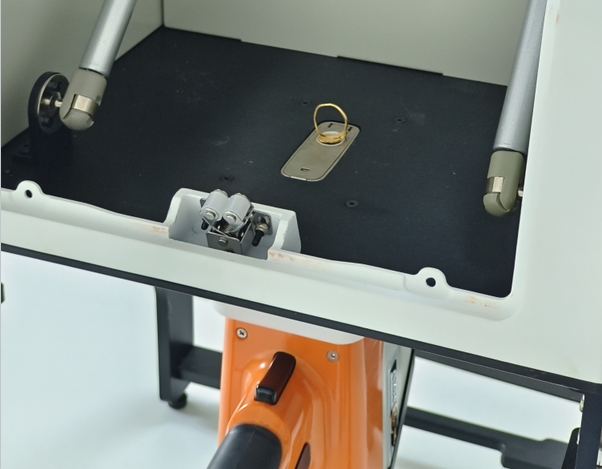
In general, the application of portable spectrometers in the metal industry has greatly improved the efficiency of analysis and monitoring of metal materials, and provided important technical support for metal production companies. AXR Terra900 Handheld metal analyzer is currently the most widely used analytical equipment on the market, which has a high-performance SDD graphene window detector, a handheld spectrometer that can analyze light metal elements, and can analyze precious metals at the same time. Accurate judgment, quick investigation, built-in more than 1600 kinds of alloy grades, and can add customer grade library according to site requirements. It has a small, fast and stable design.With the continuous advancement of technology and the continuous expansion of application scope, the status and role of portable spectrometers in the metal industry will be further strengthened and expanded.
Portable spectrometers offer several advantages over traditional spectrometry methods, including:
Portability: Perhaps the most significant advantage of portable spectrometers is their portability. Unlike traditional spectrometers, which are bulky and require specialized equipment, portable spectrometers can be easily carried and used in the field or on-site.
Real-time Analysis: Portable spectrometers also offer real-time analysis capabilities, allowing researchers to collect and analyze data on-site without the need for time-consuming sample preparation or transport to a laboratory.
Cost-effectiveness: Portable spectrometers are often more cost-effective than traditional spectrometry methods, as they require fewer resources and can be used in a wider range of settings.
As portable spectrometers continue to evolve and improve, their impact on various industries is only expected to grow. From agriculture to healthcare, from environmental monitoring to materials science, portable spectrometers are changing the way we analyze and understand the world around us. With their versatility, portability, and ease of use, portable spectrometers are truly the handheld heroes of the scientific world, and their future looks brighter than ever before. As researchers continue to push the boundaries of what is possible with portable spectrometry, we can expect to see even more groundbreaking applications and discoveries in the years to come.
 Your location:
