

Quality control is a critical aspect of the manufacturing process across various industries, especially when it comes to metal products. Ensuring that metals meet specified standards and possess desired properties is essential to guarantee product performance, safety, and customer satisfaction. In recent years, advancements in technology have revolutionized quality control practices, and one such innovation that has gained significant traction is the handheld XRF (X-ray fluorescence) alloy analyzer.
Handheld xrf alloy analyzer is a portable device that utilize X-ray fluorescence technology to determine the elemental composition of metal alloys quickly and non-destructively. This technology relies on the principle that when a material is exposed to high-energy X-rays, it emits characteristic fluorescent X-rays that can be analyzed to identify and quantify the elements present in the sample. This allows operators to assess the composition of alloys and verify whether they meet specified requirements.
XRF uses the primary X-rays emitted by the X-ray tube to irradiate the sample, so that the sample is excited to emit characteristic X-ray fluorescence, and then through the X-ray fluorescence energy analysis and intensity measurement, the type and content of the elements in the sample can be quantitatively calculated.
XRF can directly test solid samples, and can perform non-destructive testing on samples that meet the test requirements. At the same time, the test speed is fast and the sensitivity is high. Since the handheld XRF analyzer is more portable, it is more suitable for rapid spot check and quality control of samples.
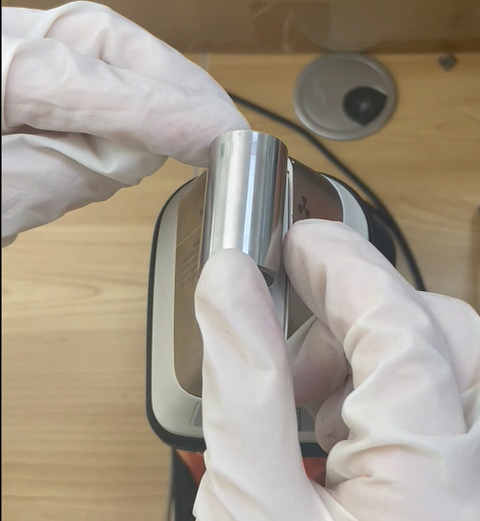
The performance of the handheld XRF analyzer Terra900 series can fully meet the requirements for rapid onsite check and quality control of denture metal raw materials.
One of the primary advantages of handheld XRF alloy analyzers is their speed and non-destructive nature. Traditional methods of alloy analysis often require sample preparation, which can be time-consuming and destructive. Handheld XRF analyzers, on the other hand, provide results within seconds without damaging the material, making them ideal for rapid quality control.
The handheld nature of these devices means that they can be used on-site, at various stages of production, or even in the field. This portability offers flexibility and enables real-time decision-making, reducing the need for sending samples to a centralized laboratory for analysis.
Handheld XRF alloy analyzers are designed to be user-friendly, often requiring minimal training to operate effectively. This ease of use empowers quality control personnel, operators, and even suppliers to perform quick alloy verification without extensive technical expertise.
Handheld XRF analyzers can simultaneously detect and quantify multiple elements present in the alloy, providing comprehensive information about its composition. This feature is particularly beneficial for assessing complex alloys and identifying trace elements that might impact the material's properties.
Traditional destructive testing methods can result in material wastage. Handheld XRF analyzers eliminate the need for sample preparation and reduce material waste, contributing to cost savings and more sustainable production practices.

Handheld XRF analyzers can be used to quickly verify the composition of raw materials and incoming metal alloys from suppliers. This helps ensure that the materials meet specifications before they are incorporated into the production process.
During manufacturing, these analyzers can be used to monitor the composition of metal alloys at various production stages. This helps identify deviations from specifications in real-time, allowing for immediate corrective actions.
Before products are released to customers, handheld XRF analyzers can be used for final product verification to confirm that the alloys meet the desired specifications. This ensures that only high-quality products are delivered to the market.
Handheld XRF analyzers are also valuable tools in research and development, allowing scientists and engineers to analyze the composition of new alloys and optimize their properties.
While handheld XRF alloy analyzers offer numerous benefits, it's important to consider certain challenges, such as the limitation in detecting light elements, potential calibration drift over time, and the need for periodic recalibration to maintain accuracy.
Handheld XRF alloy analyzers have revolutionized metal quality control by providing a rapid, non-destructive, and portable solution for elemental analysis. Their ability to deliver accurate results on-site and in real-time empowers manufacturers to make informed decisions, enhance production efficiency, and ensure that metal products meet stringent quality standards. As technology continues to advance, these analyzers will likely play an even more significant role in driving quality improvements across various industries.
 Your location:
