

In the world of precious metals, ensuring authenticity is crucial. Precious metals such as gold, silver and platinum have attracted passion for centuries. Whether in the world of jewelry and investments, or in industrial applications, the purity and authenticity of precious metals are of great value. To ensure accurate evaluation and quality control, dedicated testing machines were developed. As demand for precious metals such as gold, silver, and platinum continues to increase, accurate and efficient testing methods have become increasingly important. Precious metal testing machines play a key role in verifying the purity and quality of these valuable commodities. In this article, we’ll delve into the science behind these advanced inspection machines and explore the technologies that make them indispensable in the industry.
Precious metal testing machines play a vital role in various industries and fields. Jewelers, pawn shops, alchemists and even government agencies rely on these machines to determine the authenticity and purity of precious metals. Additionally, manufacturers and investors use them to verify the quality of raw materials and assess the value of their assets. The accuracy and reliability of testing machines is critical to ensuring fair trading and maintaining the integrity of precious metals markets.
The fire test, also known as lead legalization, is a traditional but reliable technique for determining the purity of precious metals. In this process, a metal sample is heated to high temperatures in the presence of a collecting metal such as lead. The precious metals are alloyed with the collector metal, while the impurities are separated into dross. The remaining alloy is then analyzed to determine the precious metal content. Although time-consuming, the fire test method remains the benchmark for precious metals testing accuracy.
ICP-MS is a highly sensitive and precise technology for the analysis of trace elements in precious metals. In this method, the sample is ionized and then passed through a mass spectrometer. The machine measures the mass-to-charge ratio of ions, allowing the identification and quantitative determination of the various elements present in the sample. ICP-MS is particularly useful for detecting trace impurities that may be present in trace amounts but may significantly affect the quality and value of precious metals.
LIBS is a cutting-edge technology increasingly used in modern precious metal testing machines. It involves focusing high-energy laser pulses onto a metal surface, creating a jet of plasma. The light emitted by the plasma is analyzed to determine the elemental composition of the metal. LIBS provides rapid analysis that can detect elements in real time without sample preparation. It is particularly suitable for on-site analysis and non-destructive testing.
XRF is non-destructive and provides fast results, making it one of the widely used techniques in precious metal analysis. XRF machines use X-rays to excite the atoms of a sample, causing them to emit characteristic X-ray fluorescence. By analyzing the emitted X-rays, the machine can determine the elemental composition of the sample. This non-destructive method is very effective in identifying impurities and measuring the concentrations of different metals in alloys. XRF technology bombards a metal sample with X-rays, causing the atoms in the sample to emit characteristic fluorescent X-rays. By measuring the energy and intensity of these emitted X-rays, the machine can determine the elemental composition and purity of the metal.
X-ray fluorescence (XRF) technology has many advantages in precious metal detection, making it one of the widely used methods in the industry. XRF technology is a non-destructive detection method that does not require physical or chemical changes to the sample. This means that during testing, the precious metal sample remains intact without the need for destructive sampling, ensuring sample integrity and usability.
XRF testing usually provides results within a short time. In comparison, some traditional detection methods, such as fire testing, may take longer to complete. This rapid result increases efficiency in production lines or on-site inspections.
XRF technology can detect multiple elements simultaneously, making it a versatile method. This is useful for accurate analysis of multiple elements present in precious metal alloys, whereas some other methods may require multiple steps or techniques to achieve.
XRF technology can be applied to a variety of sample forms, including solids, liquids and powders. This flexibility makes it widely applicable in different precious metal applications.
XRF equipment is usually designed to be portable and can be easily carried to different locations for on-site testing. This portability makes it ideal for areas such as mining, metal processing and trading.
XRF technology is able to provide real-time monitoring and real-time results, allowing operators to take immediate necessary actions, such as adjusting production processes or verifying the authenticity of goods.
Overall, the efficiency, flexibility, and accuracy of X-ray fluorescence technology give it unique advantages in precious metal detection, especially in situations where rapid, multi-element analysis and non-destructive testing are required.
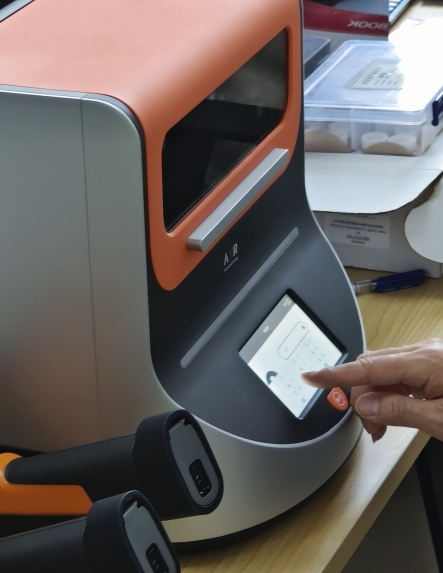
Designed for high-precision analysis of jewelry and precious metals. AURORA series benchtop precious metal analyzers, the measurement process only takes a few seconds, and the results are displayed in percentage and K value. Coatings and non-standard alloys can also be detected. The X-ray source is a high-performance 4W micro X-ray tube, the silver target is 50kV/80μA (maximum), the detector is an imported high-performance semiconductor silicon detector, the resolution is <140eV fwhm at Mn Ka, and the multi-channel processor is 4096 pixels Multi-channel analyzer/80 MHz ADC digital signal processor, can analyze the ten precious metal elements of Rh, Pd, Au, Ir, Pt, Os, Ru, Re, Ag, In, and can detect Cr, Cd, Ni, Pb, Sb , As and other toxic elements, as well as other elements such as Mn, Fe, Co, Cu, Zn, Bi, Zr, Sn, Ga, Ge, W and so on. It will alert the user when identifying gold-plated products. It uses AXRSPEC software and is controlled by WiFi connection; it can view spectra, export data, and print reports (add company LOGO and other information). It can accommodate 100,000 pieces of data storage and supports Chinese, English and Russian.
As the precious metals market continues to grow, the importance of accurate and reliable testing methods cannot be ignored. The science behind precious metal detection machines spans a range of advanced technologies, each with its own unique advantages. Whether using XRF, fire assay, ICP-MS or conductivity testing, these machines play a vital role in maintaining the integrity of the precious metals industry. Precious metal testing machines are indispensable tools for analyzing and verifying the purity of valuable metals. Through technologies such as XRF, fire assay, ICP-OES and LIBS, these machines provide accurate and reliable results, ensuring the integrity of the precious metals market. As technology continues to advance, we can expect further innovations in precious metal testing, allowing us to identify and appreciate these timeless treasures with greater precision and confidence. Understanding the science behind these testing methods enables industry professionals to make informed decisions and ensure the authenticity and quality of precious metals in global markets.
 Your location:
