

In the world of precious metals, gold holds a unique place due to its intrinsic value and significance in various industries, from jewelry to electronics and investments. The ability to accurately and rapidly determine the gold content in different materials is of paramount importance. This is where Handheld Gold Analyzers come into play. In this article, we will delve into the scientific principles behind these portable devices, exploring their technology, operation, and wide-ranging applications.
Handheld Gold Analyzer is an advanced instrument that utilize cutting-edge technologies to assess the gold content in various samples. Two common technologies employed in these devices are X-ray Fluorescence (XRF) and Laser-Induced Breakdown Spectroscopy (LIBS).
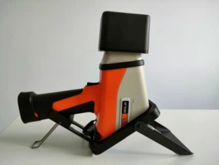
XRF technology is based on the principle of elemental analysis through the measurement of fluorescent X-rays emitted by a sample when exposed to high-energy X-rays. The process begins by directing X-rays onto the sample, which causes the sample's atoms to become temporarily excited and release energy in the form of secondary X-rays. Each element emits characteristic X-ray energies, allowing the analyzer to identify and quantify the elements present in the sample, including gold. The intensity of the emitted X-rays is directly proportional to the concentration of the elements in the sample. AXR Terra900 Handheld precious metal analyzer, based on advanced ceramic packaged microfocus X-ray tube and high-performance semiconductor detector, combined with advanced software algorithm, can quickly, accurately and non-destructively test gold, silver, platinum and other precious metals concentration in jewelry, to fast indentify the purity of jewelry, investment gold and various precious metal materials.
LIBS technology involves focusing a high-energy laser pulse onto the sample's surface, causing a small amount of material to vaporize into plasma. The plasma emits a unique spectrum of light as it cools down, and this spectrum is analyzed to identify the elements present in the sample. The energy levels and wavelengths of the emitted light correspond to specific elements, enabling the determination of gold content.

One of the primary applications of Handheld Gold Analyzers is in the jewelry industry. Jewelers and buyers can quickly verify the authenticity and purity of gold items, ensuring fair transactions and preventing fraud. Handheld analyzers offer a non-destructive method of assessing gold content, which is especially crucial when dealing with valuable jewelry pieces.
In the mining industry, these portable devices are employed for on-site analysis of ore samples. Geologists and mining engineers can assess the gold content of potential mining sites rapidly, aiding in decision-making processes and reducing the need for lengthy laboratory analysis.
Recycling centers and metal refineries use Handheld Gold Analyzers to sort and determine the gold content in scrap materials. This enables efficient separation of valuable materials, contributing to sustainable resource utilization.
In archaeology and historical research, these analyzers are utilized to identify the composition of artifacts and antiquities containing gold. This information aids in understanding ancient metallurgical techniques and trade routes.
While Handheld Gold Analyzers offer convenience and speed, it's essential to acknowledge potential challenges. Factors such as sample composition, surface conditions, and the accuracy of the device itself can influence results. Therefore, for critical analyses, cross-validation with laboratory methods remains crucial.
Handheld Gold Analyzers represent a fascinating marriage of science and technology, enabling us to explore the elemental composition of materials in the palm of our hands. Their application spans from jewelry authentication to mining exploration, recycling, and historical research. As technology continues to advance, these devices are likely to become even more accurate, efficient, and indispensable in various fields related to precious metals.
 Your location:
