

In the fields of scientific exploration and industrial applications, technological advancements have created conditions for more efficient and portable tools. One notable innovation in recent years is the handheld fluorescence spectrometer. In its various applications, these devices have revealed the capability to insightfully examine fluorescence, sparking great interest in research and industrial sectors. The ability to accurately analyze and characterize materials is crucial for progress and innovation in both research and industry. The handheld spectrometer, as a valuable tool, has emerged with portability and versatility, playing a significant role in various applications. This article explores the multifaceted potential of handheld spectrometers, revealing how these compact devices are changing the way we analyze fluorescence in different fields.
A handheld spectrometer is a compact, portable device capable of measuring the intensity and wavelength of light. While traditional benchtop spectrometers have played a role in various scientific fields, the emergence of handheld versions has revolutionized the accessibility and versatility of spectroscopic analysis. These devices excel in capturing fluorescence signals, making them valuable tools for researchers and industrial professionals.
One of the key advantages of handheld spectrometers is their portability. Unlike traditional benchtop instruments, handheld devices provide researchers and industrial professionals with convenient on-site analysis capabilities. They can be easily carried to different locations, enabling real-time measurements. This portability allows researchers to study materials on-site, reducing the need for sample transportation and minimizing the risks of sample changes or contamination. Handheld spectrometers provide rapid analysis capabilities, delivering results within seconds. Researchers and industrial professionals can obtain valuable data instantly, facilitating quick decision-making and efficient workflow management. The speed of analysis not only saves time but also enhances productivity, enabling researchers to conduct more experiments or perform quality control assessments in a shorter timeframe.
Non-destructive analysis is a significant advantage of handheld spectrometers. The ability to analyze materials without altering or damaging the sample is particularly important for fragile or rare specimens. For example, in archaeological studies, handheld spectrometers can provide valuable information about the composition of artifacts without the need for invasive sampling. This non-destructive method preserves the integrity of the material and allows for further analysis or future preservation.
Handheld spectrometers find applications in various fields, including environmental monitoring, pharmaceuticals, agriculture, food safety, and materials science. These instruments can identify and quantify multiple parameters such as chemical composition, elemental analysis, and material properties. Whether assessing soil quality in agriculture, detecting contaminants in food products, or analyzing the composition of cultural heritage artifacts, handheld spectrometers offer insights that were once limited to laboratory instruments.
In environmental research, handheld spectrometers play a crucial role in assessing ecosystem health. They are used to analyze fluorescence markers in water, soil, and air, aiding in the detection of pollutants and monitoring environmental changes.
Material research benefits significantly from the use of handheld spectrometers. Researchers can analyze the fluorescence of materials for rapid identification and characterization, particularly useful in quality control processes and the development of advanced materials.
Handheld spectrometers are used in the food and beverage industry for quality control and assurance. These devices can detect fluorescence markers, indicating the presence of food spoilage, contaminants, or undesirable substances, ensuring the production of safe and high-quality products.
In pharmaceutical manufacturing, precision is crucial, and handheld spectrometers are used for online process monitoring. The ability to analyze fluorescence helps ensure the consistency and quality of pharmaceutical products throughout the production chain.
Handheld spectrometers play a critical role in precision agriculture, enabling farmers to assess the health of crops by analyzing fluorescence markers. This information helps make informed decisions about agricultural management, optimizing yields, and reducing environmental impact.
Despite offering significant advantages, handheld spectrometers still face challenges that need to be overcome, such as calibration issues and sensitivity limitations. However, ongoing technological advancements are addressing these issues, paving the way for more complex and reliable devices.
As technology continues to evolve, the future of handheld spectrometers looks promising. Integration with artificial intelligence and machine learning algorithms is expected to enhance their analytical capabilities, opening up new possibilities for research and industrial applications.
Based on the above recommendations, I highly recommend the AXR Handheld Elemental Analyzer. The main products of the AXR brand include handheld analyzers, online XRF analyzers, desktop X-ray fluorescence spectrometers, etc. The main models of handheld analyzers include handheld alloy analyzers, soil analyzers, ternary lithium battery analyzers, and coating analyzers. , precious metal analyzer. Different models can be selected for different application scenarios. Taking the Terra970 handheld ternary lithium battery analyzer as an example, based on an advanced ceramic package micro-focus X-ray tube and a high-performance semiconductor detector, combined with advanced software algorithms, it can quickly and accurately detect Ni in ternary lithium batteries. , Co, Mn and other restricted element content, it is a powerful assistant for lithium battery manufacturers to carry out quality control and safety precautions, and for waste lithium battery recyclers to quickly classify. Terra970 handheld ternary lithium battery analyzer can quickly and accurately detect the content of Ni, Co, Mn and other restricted elements in ternary lithium batteries. It is an ideal tool for lithium battery manufacturers to carry out quality control and safety precautions, and to recycle used lithium batteries. A powerful assistant for merchants to quickly classify.
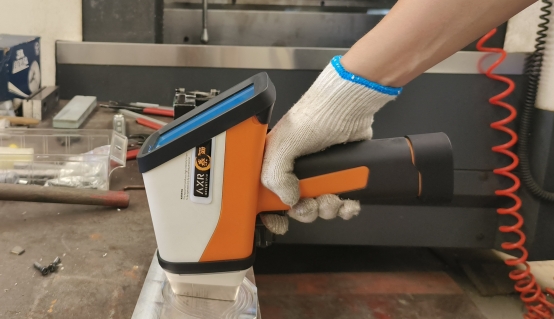
These compact devices, with their ability to capture fluorescence insights, provide unprecedented flexibility and efficiency for researchers and industrial professionals. As technology continues to advance, the handheld spectrometer's potential to unlock new realms of understanding and discovery is limitless, making it an indispensable tool for the future of scientific exploration and industrial innovation. The handheld spectrometer has transformed the way materials are analyzed in research and industry. Their portability, rapid analysis capabilities, wide range of applications, non-destructive characteristics, and user convenience make them essential tools for obtaining valuable fluorescence insights. With ongoing technological development, handheld spectrometers are becoming more powerful, accurate, and cost-effective, enabling researchers and industrial professionals to discover new possibilities in their respective fields.
By harnessing the potential of handheld spectrometers, researchers can gain in-depth insights into material properties, optimize processes, and drive innovation. In industry, these devices contribute to quality control, ensuring compliance, and enhancing product development. With the growing demand for on-site analysis and efficient data acquisition, handheld spectrometers will continue to play a crucial role in shaping research and industrial practices.
In conclusion, leveraging the capabilities of handheld spectrometers opens new pathways for exploration, discovery, and problem-solving. These portable instruments empower researchers and industrial professionals with the ability to make informed decisions, improve efficiency, and fully unlock the potential of various materials.
 Your location:
