

In the field of materials analysis and characterization, technological advances are always pushing the boundaries of possibility. One breakthrough that is reshaping the field is the advent of portable X-ray fluorescence (XRF) guns. These compact and powerful devices are revolutionizing the landscape of on-site materials characterization, providing researchers, archaeologists, geologists and industry with unprecedented flexibility and efficiency. In the field of materials characterization, technological advances have revolutionized the way we analyze and understand different substances. It opens up new possibilities for on-site material characterization. These handheld devices enable researchers, engineers and professionals to collect data and make informed decisions in real time, without the need for laboratory analysis.
XRF technology itself is not new. Traditional XRF instruments have been used in laboratories to analyze the elemental composition of materials for decades. However, the introduction of portable XRF guns brought about a revolution by enabling users to take the laboratory into the field. XRF technology is based on the principle that when a material is bombarded by X-rays, it emits characteristic fluorescent X-rays. These X-rays can be detected and analyzed to determine the elemental composition of the sample. Portable XRF instruments utilize this technology in a compact and portable form, allowing non-destructive analysis to be performed in the field without the need for sample preparation or transport to a laboratory. This interaction causes atoms in the sample to emit characteristic X-ray fluorescence, which is then detected and analyzed to determine the material's elemental composition. Portable XRF guns are unique in their compact size, user-friendly interface, and ability to provide real-time results.
The advent of portable XRF instruments has revolutionized materials characterization by providing several key advantages. First, they provide immediate results, allowing decisions to be made and problems to be solved immediately. This is particularly beneficial in fields such as archaeology, geology and environmental science, which require fast and accurate data collection. Second, these devices are non-destructive, preserving the integrity of valuable or sensitive samples. Additionally, the portability of these instruments allows analysis to be performed in the field, reducing the time, cost, and logistical challenges associated with laboratory-based testing.
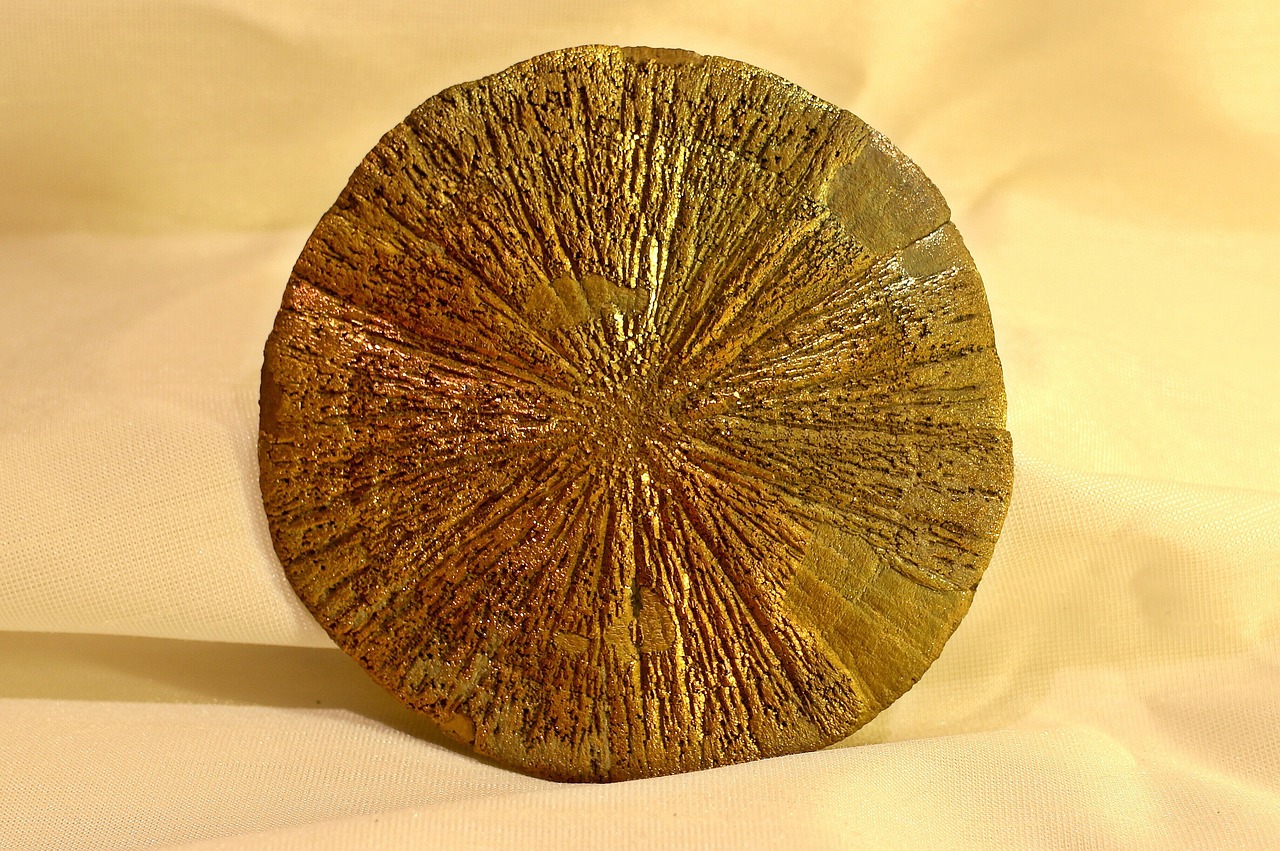
The versatility of portable XRF guns is reflected in their applications in various industries. Portable XRF instruments are used in a wide range of industries. In mining and exploration, they are used to analyze the elemental composition of ores and minerals, aiding in resource estimation and process optimization. In manufacturing, these instruments can aid quality control by ensuring the correct composition of materials and detecting impurities. Environmental monitoring can assess soil and water contamination through on-site analysis. Archaeologists and art conservation experts can use portable XRF instruments to analyze the composition of historical artifacts and artworks, aiding in identification and conservation efforts.
Mining and Geology: Portable XRF guns are invaluable to geologists and mining professionals. They enable rapid and accurate analysis of soil, rock and mineral samples, aiding exploration and resource estimation. The ability to obtain immediate field results accelerates the decision-making process in exploration and mining operations.
Archeology and Cultural Heritage: Archaeologists benefit from the portability of XRF guns during on-site excavations and artifact analysis. These devices help identify the elemental composition of archaeological finds, providing a deeper understanding of historical materials and preservation methods.
Environmental monitoring: Environmental scientists use portable XRF guns to analyze soil and water samples in the field. This allows for rapid assessment of contamination levels, helping to identify contaminants and prompt timely remediation efforts.
Metal and Alloy Analysis: In the manufacturing and metal industries, portable XRF guns help analyze alloys and metals. This capability is critical for quality control, ensuring materials meet required standards, thereby reducing production delays.
As a result, Handheld XRF Analyzer Terra990 is a good choice for you. Here are some features of it.1.Fast Results. Terra 900' algorithm perfectly adopts powerful fundamental parameters method (FP). With a triggering, the alloy grade can be identified within 1-2 seconds. 2.Nondestructive Analysis. Unlike destructive testing, samples remain undamaged by X ray. 3.Easy to Operate. Ergonomic design, light weight, small size and good balance for holding in hand. Large capacity of battery ensures work for 10-12 hours for onsite testing without worrying recharging. 4.Minimal Maintenance Cost. Anti-puncture window design effectively protects the front end of the device.Rugged design with IP54 standard dustproof and waterproof. 5.Minimal Training. With easy operation design, user needs the minimal training for operation. Icon-style user interface very intuitive and simple.
The adoption of portable XRF guns benefits from several key advantages.
Flexibility and Accessibility: The compact design of these instruments enables researchers to perform analyzes in remote or challenging terrain, eliminating the need to transport samples to a laboratory.
Real-time results: One of the most significant benefits is the ability to obtain results on-site, reducing the time and costs associated with traditional laboratory analysis. This immediacy facilitates rapid decision-making in various fields.
Non-destructive analysis: Portable XRF guns allow non-destructive analysis, protecting valuable samples and artifacts. This is particularly critical in fields such as archaeology, where the integrity of historical material must be maintained.
User-Friendly Interface: These instruments have a simple design and a user-friendly interface, making them suitable for individuals with varying skill levels.
Although portable XRF instruments offer many advantages, they also have limitations that need to be considered. One limitation is sensitivity to surface composition, which may affect the accuracy of results for layered or coated samples. Additionally, while XRF instruments can provide elemental composition data, they may not provide detailed information about chemical bonding or crystal structure. Users should also understand the limitations of the specific instrument and ensure appropriate user training to obtain accurate and reliable results.
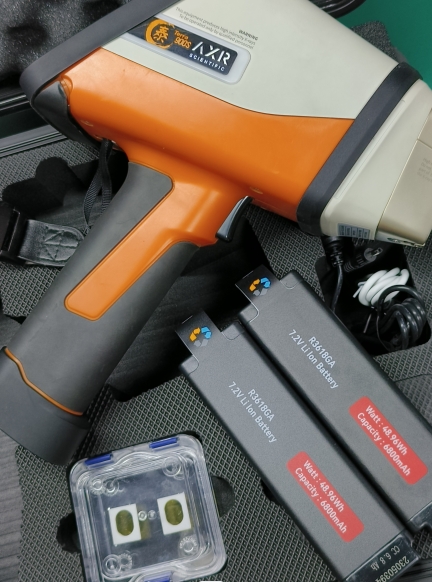
Although portable XRF guns offer many advantages, there are still some challenges, such as sensitivity limitations to certain elements and potential interference from the sample matrix. Researchers and manufacturers are actively working to address these issues, aiming to further improve the capabilities of portable XRF technology. As technology continues to evolve, we can expect more sophisticated portable XRF instruments with greater accuracy, expanded element coverage, and improved data interpretation algorithms. The future holds the promise of increasingly powerful and versatile tools that will continue to push the boundaries of on-site materials characterization.
Portable XRF guns have become transformative instruments, providing on-site material characterization capabilities in a variety of fields. From mining and geology to archeology and environmental monitoring, these devices empower professionals with real-time results in the field, promoting efficiency and informed decision-making. With the continuous development of technology, the future of portable XRF guns is full of hope, indicating that material analysis will move beyond the limitations of traditional laboratories and enter a new era. The future of on-site materials characterization is promising as we continue to push the boundaries of portable XRF instrumentation and explore new frontiers in materials analysis.
 Your location:
