

In the field of metal analysis, accuracy and efficiency are critical. In industries such as manufacturing, mining and construction, accurate analysis of metal composition plays a vital role in quality control, process optimization and material selection. Portable spectrometers have become valuable tools for on-site metal analysis, providing convenience and real-time results. However, when considering purchasing a portable spectrometer, it is crucial to evaluate its features and price to ensure you get the best value for your money. Portable spectrometers have become indispensable tools, allowing on-site metal composition analysis in a variety of industries, from manufacturing to mining. However, with the vast number of options available, it becomes critical to evaluate the capabilities and cost of a spectrometer to ensure you get the best value for money. This article will delve into the key considerations when evaluating portable spectrometers for metals analysis price, weighing functionality against price to make an informed investment decision.
Accuracy and Precision: The main purpose of a portable spectrometer is to provide accurate and precise metal analysis. Look for equipment equipped with advanced technologies such as laser-induced breakdown spectroscopy (LIBS) or X-ray fluorescence (XRF). These technologies ensure reliable results, allowing users to make informed decisions based on the elemental composition of the metals being analyzed. Different applications may require the analysis of different elements, so it is critical to evaluate the elemental range and detection limits of a portable spectrometer.
Durability and Portability: Portable spectrometers are designed for use in a variety of environments, from laboratories to remote field locations. Evaluate the build quality and durability of your device, taking into account protection against dust, water, and extreme temperatures. The robust and portable design ensures the spectrometer can withstand a variety of operating conditions. The design and ergonomics of a portable spectrometer have a significant impact on its ease of use and efficiency. Consider factors such as weight, size, and ergonomics to ensure you can operate the instrument comfortably while working in the field.
Range of metals that can be analyzed: Different industries may require analysis of specific metals. Make sure the portable spectrometer you choose can analyze a broad range of elements relevant to your application. Some models may be specialized for use with certain metals, so it's important to match your spectrometer's capabilities to your specific analytical needs.
Battery life: The main advantage of a portable spectrometer is its ability to perform analyzes in the field, so battery life and portability are key considerations. Evaluate the instrument's battery capacity and its ability to withstand extended use without frequent recharging. Since portability is a key feature of these devices, battery life becomes critical.
Calibration and Maintenance: Regular calibration is critical to maintaining the accuracy of your spectrometer. Evaluate the ease of calibration and required frequency. Additionally, consider maintenance requirements and associated costs to ensure the equipment remains in optimal condition throughout its useful life.
Cost analysis: While it’s tempting to choose the cheapest option, it’s crucial to evaluate overall value for money. Consider the cost of ownership, including the cost of maintenance, calibration and potential upgrades. Sometimes, a slightly higher initial investment can lead to long-term cost savings and better performance. While the price of a portable spectrometer is an important consideration, it should be considered in conjunction with the instrument's features and long-term benefits. Consider the total cost of ownership, including not just the initial purchase price but also aspects such as maintenance, calibration and software updates.

X-ray fluorescence (XRF) and laser-induced breakdown spectroscopy (LIBS) are both advanced techniques for materials analysis, but they have some significant differences in how they work and their applications. Here are some advantages of XRF over LIBS:
XRF: XRF can provide relatively deep depth of analysis, typically in the range of millimeters to centimeters. This makes XRF suitable for analyzing the overall composition of a material.
LIBS: The analysis depth of LIBS is usually shallow, on the order of a few hundred microns. This makes LIBS more suitable for rapid analysis of surface layers.
XRF: XRF can usually analyze multiple elements simultaneously in one measurement, covering a wide range of elements. This makes XRF particularly suitable for applications that require comprehensive analysis of multiple elements.
LIBS: LIBS can also perform multi-element analysis, but its analysis range may be somewhat limited, especially in the high-energy region.
XRF: XRF generally has a faster analysis speed, providing results in seconds to minutes. This is very advantageous for applications requiring high-throughput analysis.
LIBS: LIBS can also provide fast results, but may require more time for sample preparation and adjustment.
XRF: XRF generally has higher sensitivity and is able to detect elements at low concentrations. This is important for applications that require the detection of light elements or trace analysis.
LIBS: The sensitivity of LIBS can also be very high, but in some cases the detection of light elements may be relatively challenging.
XRF: XRF is widely used on different types of samples including solids, liquids and powders. It can be applied to a variety of sample types such as metals, soils, rocks, etc.
LIBS: LIBS is also very flexible in handling different sample types, but may be more sensitive to the surface state of the sample.
When choosing XRF or LIBS, their advantages and disadvantages need to be weighed based on specific application requirements and sample properties. Some applications may be better suited to XRF, while others may be better suited to LIBS. At the same time, the continuous development of technology may also change their performance and scope of application.
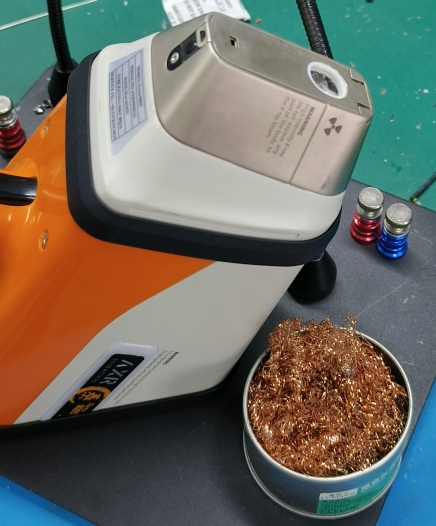
As a result, Handheld XRF Analyzer Terra990 is a good choice for you. Here are some features of it.1.Fast Results. Terra 900' algorithm perfectly adopts powerful fundamental parameters method (FP). With a triggering, the alloy grade can be identified within 1-2 seconds. 2.Nondestructive Analysis. Unlike destructive testing, samples remain undamaged by X ray. 3.Easy to Operate. Ergonomic design, light weight, small size and good balance for holding in hand. Large capacity of battery ensures work for 10-12 hours for onsite testing without worrying recharging. 4.Minimal Maintenance Cost. Anti-puncture window design effectively protects the front end of the device.Rugged design with IP54 standard dustproof and waterproof. 5.Minimal Training. With easy operation design, user needs the minimal training for operation. Icon-style user interface very intuitive and simple.
In the world of portable spectrometers for metal analysis, achieving value for money involves a careful balance between functionality and cost. When evaluating portable metal analysis spectrometers, a balance needs to be struck between features and price to ensure value for money. Consider factors such as accuracy, element range, instrument design, battery life, and overall portability. Evaluate the long-term benefits and return on investment of your instrument to make informed decisions. By carefully evaluating these factors, you can select a portable spectrometer that meets your specific requirements, increases productivity, and provides accurate and reliable results in on-site metals analysis. By prioritizing key factors such as accuracy, ease of use, durability, and more, businesses can make informed decisions that fit their specific needs. Investing in a high-quality portable spectrometer not only ensures reliable metals analysis, but also long-term efficiency and cost-effectiveness.
 Your location:
