

In today's highly competitive manufacturing industry, maintaining high quality standards is critical to business success. To achieve this, companies rely on advanced technologies to streamline their quality assurance processes. One technology that has made a huge impact is PMI (Forward Material Identification) XRF analyzers. This advanced instrument revolutionizes quality control in manufacturing by enabling fast and accurate material analysis. Quality assurance is the backbone of manufacturing, ensuring products meet strict standards and specifications. In recent years, advances in technology have revolutionized the way manufacturers approach quality control. One of the innovations that has had a major impact in the industry is the introduction of PMI (Positive Material Identification) XRF (X-Ray Fluorescence) analyzers. These cutting-edge devices usher in a new era in quality assurance, providing manufacturers with unparalleled precision and efficiency.
PMI XRF analyzers are handheld devices designed to identify and analyze materials quickly and non-destructively. They utilize X-ray fluorescence technology, in which the material being analyzed is exposed to X-rays, causing it to emit fluorescent X-rays, and these X-rays are then detected and analyzed. This process provides a precise breakdown of a material’s elemental composition, allowing manufacturers to verify that it meets required specifications. PMI XRF analyzers play an important role in ensuring material integrity by accurately identifying and verifying the composition of metals and alloys. Manufacturers can quickly determine whether the materials used in production meet required specifications, preventing the use of inferior or counterfeit materials. This helps maintain consistency, reliability and safety in the manufacturing process, ultimately resulting in a high-quality end product.

Instant material identification:PMI XRF analyzers provide real-time results, allowing manufacturers to instantly identify materials. This is critical to preventing errors during production and ensuring the correct materials are used for specific parts.
Non-destructive testing:Unlike traditional testing methods that may require destructive sampling, PMI XRF analyzers perform non-destructive testing. This means manufacturers can analyze materials without altering or damaging them, maintaining the integrity of the finished product.
Enhanced accuracy:PMI XRF analyzers are unmatched in accuracy, providing precise information about the elemental composition of materials. This accuracy is critical in an industry where even slight deviations from specifications can lead to product failure or safety issues.
Quality control efficiency:These handheld devices simplify the quality control process and allow efficient testing at the production site. Manufacturers can perform instant analysis, reducing the time and resources traditionally spent on laboratory testing. Quality control is a key aspect of manufacturing and involves rigorous testing and inspection of components and finished products. PMI XRF analyzers simplify and speed up the quality control process by providing rapid on-site analysis. Manufacturers can conduct real-time material verification, identify impurities, and check compliance with industry standards. This eliminates tedious laboratory testing and reduces the risk of errors or delays in production. With PMI XRF analyzers, quality control becomes more efficient, ensuring that only products that meet requirements reach the market.
Meet industry standards:Complying with industry standards and regulations is a top priority for manufacturers. PMI XRF analyzers help ensure compliance with standards by providing a reliable method of verifying that materials meet specified requirements. In safety-critical industries such as aerospace, automotive and medical devices, ensuring product safety and compliance is important. PMI XRF analyzers play an important role in this by being able to identify harmful elements or restricted substances in materials. Manufacturers can quickly screen for elements such as lead, mercury or cadmium to ensure compliance with regulatory guidelines and avoid potential health risks. By proactively addressing security issues, businesses can protect their reputation, reduce liability risks, and build trust with their customers.
Saving cost:The efficiency and accuracy of PMI XRF analyzers help manufacturers save costs in many ways. Reducing laboratory testing, preventing production errors, and avoiding material waste all contribute to a more cost-effective manufacturing process. Using PMI XRF analyzers in the manufacturing process not only improves quality, but also increases efficiency and saves costs. By eliminating the need for external laboratory testing and reducing inspection time, manufacturing processes can be streamlined and downtime reduced. Additionally, by identifying and resolving material inconsistencies at an early stage, manufacturers can minimize scrap, rework and unnecessary costs. Efficient use of resources and early detection of quality issues can lead to long-term cost savings.
In today's highly competitive market environment, the Terra 900S handheld XRF mineral analyzer is a leading and portable elemental analysis instrument. As the requirements for accuracy and speed of material analysis in the industrial field continue to increase, the Terra 900S handheld XRF mineral analyzer has become an ideal tool to solve this problem and has been widely used in the mining industry.
The Terra 900S handheld XRF mineral analyzer uses advanced electronic technology and unique software algorithms to complete composition analysis and display elemental content in seconds. Users only need simple training to operate the instrument easily. The device is not limited by location, sample shape and size, and does not require sample preparation. This makes the Terra 900S handheld XRF mineral analyzer a powerful tool for elemental analysis in the fields of quality control, component identification, material classification, safety precautions and other fields.
The Terra 900S handheld XRF mineral analyzer has higher accuracy and faster response time, which can effectively improve production efficiency and save detection costs. In addition, the device is durable, easy to use and maintain. It can work outdoors and in harsh environments and is a powerful assistant for mining workers, engineers and scientists.
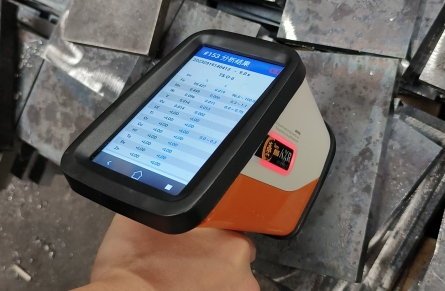
Integrating PMI XRF analyzers into the manufacturing process marks an important new stage in quality assurance. The advent of PMI XRF analyzers has transformed quality assurance in manufacturing. By ensuring material integrity, streamlining quality control, improving product safety and compliance, optimizing supply chain management, and increasing efficiency and cost savings, these analyzers have become an indispensable tool for manufacturers to deliver high-quality products. As technology continues to advance, PMI XRF analyzers will play an increasingly important role in maintaining quality standards and promoting manufacturing innovation. As the industry continues to evolve, the need for precision and efficiency in production has never been greater. PMI XRF analyzers not only meet these needs but also set new standards for non-destructive, real-time materials analysis. Manufacturers adopting this technology will be able to usher in a new era of quality control, ensuring that their products not only meet, but exceed the expectations of consumers and industry standards. In a world where quality is paramount, PMI XRF analyzers are proving to be an indispensable tool for manufacturing excellence.
 Your location:
