

Metals play an important role in many industries and are a key component in construction, transportation, electronics, machinery and equipment. Understanding the composition and properties of metals is critical to ensuring quality, performance and safety. In the past, metal analysis required complex and time-consuming laboratory procedures. However, with the advent of modern metal alloy analyzers, the process has become faster, more efficient and highly accurate. These advanced instruments have revolutionized the way we understand and utilize various alloys, providing a range of capabilities that help improve quality control, enhance product development, and drive efficiencies across diverse industries.
1. Accuracy at the core: Modern metal analyzers use advanced technologies such as X-ray fluorescence (XRF) and photoelectric emission spectroscopy (OES) to provide precise and accurate analysis of metal composition. These techniques allow scientists and engineers to identify elements and their concentrations in alloys with unprecedented accuracy. Modern metal analyzers use advanced technologies such as X-ray fluorescence (XRF) and photoelectric emission spectroscopy (OES) to provide rapid elemental analysis. These instruments can quickly determine the composition of metal samples, providing important information on the presence and concentration of various elements. This capability enables manufacturers to make informed decisions, ensure compliance with industry standards, and maintain consistent product quality.
2. Diversity of applications: The versatility of modern metal analyzers spans from metallurgy and manufacturing to aerospace and healthcare, where these instruments play a role in ensuring material quality and compliance. Portable metal analyzers have revolutionized metal analysis by enabling on-site analysis and real-time applications. No longer needing to send samples to a lab to wait for results, these instruments can perform instant analysis where needed. This has important advantages in situations where quick decisions are required, such as on construction sites, quality control processes or maintenance operations. On-site analysis and real-time application reduce downtime, increase operational efficiency, and enable timely adjustments based on analysis results.

1. Real-time analysis: Unlike traditional methods which may take considerable time to produce results, modern metal analyzers provide real-time analysis. This capability is particularly valuable in industries where maintaining efficiency and quality standards is critical. Modern metal analyzers provide not only qualitative analysis but also quantitative measurements. They accurately determine the concentration of elements in a sample, ensuring precise control of material specifications. This is critical in industries that require traceability and compliance with regulatory requirements, such as the medical device and automotive industries. Accurate quantitative analysis enables manufacturers to meet strict quality standards, identify deviations and optimize manufacturing processes.
2. Non-destructive testing: One of the outstanding features of these analyzers is their non-destructive testing capabilities. Manufacturers can now evaluate the composition of materials without altering or damaging the sample, enabling cost-effective and sustainable testing procedures. Traditional metal analysis often requires the use of destructive techniques such as sample cutting or corrosion. However, portable and handheld metal analyzers can now analyze intact metal, maintaining component integrity and minimizing material waste. The ability to perform non-destructive testing makes metal analyzers an indispensable tool in fields such as aerospace, allowing inspections to be performed without compromising the structural integrity of critical components.
3. Portability and field application: Many modern metal analyzers are designed with portability in mind and can be used in the field. This is particularly beneficial for on-site inspections, quality control in remote areas, and for making quick decisions during production.
1. Metallurgy and Mining: In the field of metallurgy and mining, the composition of metals is crucial for exploration, extraction and ore processing, and modern analyzers facilitate efficient exploration and production.
2. Manufacturing and Quality Control: Manufacturers use these analyzers to ensure the quality and consistency of alloys, thereby driving product development and reducing production costs.
3. Aerospace and Automotive: The aerospace and automotive industries benefit from the portability and rapid analysis capabilities of modern metal analyzers, helping to develop lightweight and high-performance materials.
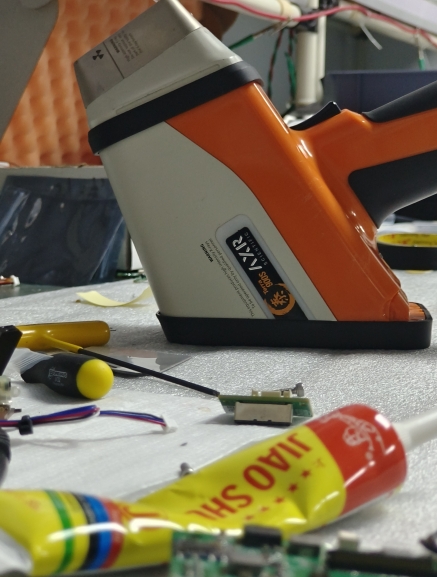
While modern metal analyzers have undoubtedly changed the way we analyze alloys, there is the challenge of continually innovating and solving specific industry needs. Future developments are likely to focus on more advanced technologies, increased automation, and integration with other technologies to further enhance analytical capabilities.
The Terra 900 series handheld alloy analyzer is an ideal tool for metal analysis in multiple fields such as quality control, grade identification, material classification, and safety precautions. Based on advanced electronic technology and unique software algorithms. The Terra 900 Series completes metal composition analysis in seconds and displays the alloy grade and elemental content on the touch screen. Users can operate the instrument proficiently with only simple training. Sample detection is not limited by location, sample shape and size, and does not require sample preparation. The excitation source is a ceramic packaged microfocus X-ray tube, and the silver target is 50KV; the detector uses a high-performance Si-Pin detector/SDD detector (graphene window); the resolution is up to 140eV FWHM/129eV FWHM; kapton window, Optional carbon fiber anti-puncture window; the CPU is i.MX 8M Mini quad-core 1.8GHz, the multi-channel processor is a 4096-pixel multi-channel analyzer/80 MHz ADC digital signal processor, and the unique AXRUNI mechanism design effectively increases light Tube heat dissipation, Safety Guard induction setting, the light tube automatically shuts down when there is no sample, providing maximum safety protection, and can analyze Ti, V, Cr, Mn, Fe, Co, Ni, Hf, Ta, Re, Cu, Zn, W, Se, Pb, Bi, Zr, Nb, Mo, Al, Pd, Ag, Sn, Sb, etc.
Modern metal analyzers have brought significant advances in the field of metal analysis, revolutionizing the way we explore and understand alloys. Through their rapid elemental analysis, identification of unknown alloys, non-destructive testing capabilities and quantitative measurements, these instruments have become indispensable tools in various industries. They play a vital role in ensuring material quality, optimizing manufacturing processes and improving product performance. In the world of alloy exploration, modern metal analyzers are regarded as invaluable tools, revealing the mysteries of metal composition with unparalleled precision and efficiency. As technology continues to evolve, these instruments are likely to play an increasingly critical role in the future of materials science and industry, opening the door to new possibilities and discoveries.
 Your location:
