

In the growing world of recycling and sustainability, the scrap metal industry plays a vital role in reducing environmental impact and protecting valuable resources. An important advance was the introduction of handheld precious metal analyzers. These compact devices are revolutionizing the way industries operate by delivering unprecedented accuracy, efficiency and convenience. As the demand for recycled materials continues to grow, efficient and accurate metal analysis becomes even more important. In the past, determining the composition and quality of scrap metal required time-consuming laboratory testing. However, with the advent of portable analyzers, things have changed. This article explores how portable analyzers are changing the game for the scrap metal industry by providing rapid on-site analysis, increasing efficiency and maximizing profits.
Before the advent of handheld analyzers, assessing the composition and quality of scrap metal was a time-consuming and laborious task. Traditional methods rely primarily on visual inspection and manual sorting, resulting in inaccuracies and inefficiencies. Additionally, a lack of real-time data makes it difficult for scrapyards to make informed decisions about pricing and disposal.
Enter handheld metal analyzers, portable devices equipped with advanced technology that can quickly and accurately determine metal composition. These devices utilize technologies such as X-ray fluorescence (XRF) and laser-induced breakdown spectroscopy (LIBS) to provide instant on-site analysis. This greatly simplifies the metal sorting process, allowing scrap yards to make faster, more informed decisions.

Accuracy and Precision: Handheld analyzers are highly accurate in identifying different metal alloys. This ensures that scrapyards can accurately sort materials and optimize their recycling processes.
Real-time data: One of the most significant advantages is the ability to obtain real-time data. Scrap metal professionals can make immediate decisions about pricing and disposal, increasing efficiency and improving overall business operations. These portable devices use techniques such as X-ray fluorescence (XRF) or laser-induced breakdown spectroscopy (LIBS) to determine the elemental composition of metals. In just seconds, scrap metal dealers and recyclers can obtain real-time data on metal alloy composition, impurities and grades. This instant feedback empowers on-site decision-making, allowing companies to make informed choices about pricing, sorting and processing scrap metal.
Cost Savings: The increased efficiency of using a handheld analyzer translates into cost savings at the scrap yard. Reduced labor hours, improved workflow and fewer errors all contribute to a more cost-effective operation. This convenience saves time and costs associated with sample transportation and outside laboratory analysis. Scrap metal recycling yards, recycling centers and metal processing industries can benefit from the portability and ease of use of these portable devices. Field testing ensures materials are accurately identified and classified, improving operational efficiency and reducing the risk of misidentification or contamination.
Environmental Impact: By accurately identifying metal composition, these analyzers help effectively separate materials and promote better recycling practices. This in turn helps reduce environmental impact and reduces the need for new metal mining. Portable analyzers play a key role in ensuring quality control and compliance with industry standards and regulations. By quickly assessing the composition of scrap metal, these analyzers help identify substandard or contaminated materials. This capability enhances a business's reputation and trust among customers, ultimately increasing market competitiveness and growth opportunities.
Versatility: Handheld analyzers are designed to be versatile and easy to use. They can be used in a variety of environments from scrap yards to construction sites, providing flexibility and adaptability to field professionals. Manufacturers are integrating more sophisticated features such as wireless connectivity, cloud-based data management and advanced data interpretation algorithms. These advancements further simplify the analysis process and make the use of portable analyzers more efficient and user-friendly.
Case studies: A number of success stories within the scrap metal industry highlight the transformative impact of handheld analyzers. Scrap yards that have integrated these devices into their operations report increased efficiency, higher material recovery rates, and improved overall profitability. By providing accurate and immediate analytics, businesses can make more informed decisions about pricing and material value. Analyzers help identify high-value metals, efficiently separate different alloys, and optimize recycling processes. With real-time data, companies can price fairly, reduce the risk of undervaluing or overpaying for scrap metal, and improve overall profitability.
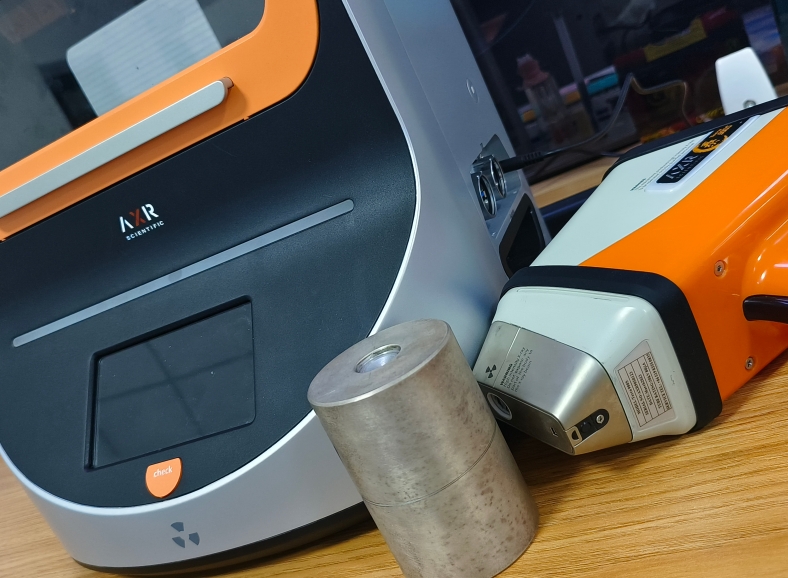
AURORA series desktop precious metal analyzers, the measurement process only takes a few seconds, and the results are displayed in percentage and K value. Also able to detect coatings and non-standard alloys. AURORA series desktop precious metal analyzers, the measurement process only takes a few seconds, and the results are displayed in percentage and K value. Coatings and non-standard alloys can also be detected. The instrument comes with an embedded computer and high-resolution touch screen display. The integrated CCD camera allows you to better locate the sample detection position. By adjusting the automatic collimator, the required measuring point diameter can be easily selected. Application scenarios include jewelry and precious metal recycling industries, pawn shop consignment industry, industrial precious metal catalysis industry, etc.
Overall, the introduction of handheld metal analyzers has caused a revolution in the scrap metal industry. These devices give professionals the tools they need to tackle the complexities of metal recycling with unprecedented accuracy and efficiency. Portable analyzers are transforming the scrap metal industry by providing instant, on-site metal analysis, increasing efficiency and maximizing profitability. The ability to obtain real-time data empowers companies to make informed decisions, allowing them to optimize scrap metal pricing, sorting and processing. Quality control, compliance and the ability to accurately identify metals help build trust and reputation within the industry. As the industry continues to embrace technological advancements, handheld analyzers play an important role in shaping a more sustainable and profitable future for scrap metal.
 Your location:
