

In today's fast-paced world, efficiency and accuracy are key factors in various industries, such as manufacturing, construction, mining, and environmental monitoring. Material identification plays a pivotal role in ensuring product quality, safety, and compliance. Traditionally, material analysis required sending samples to a lab, which could be time-consuming and expensive. However, with advancements in technology, handheld material analyzer is revolutionizing the way we identify and analyze materials, empowering professionals to perform on-the-go material identification with greater speed and precision.
The demand for portable material analyzers has been driven by several factors. These devices are designed to offer an array of benefits to industries that rely on material identification for decision-making processes. Their advantages include rapid identification, cost-efficiency, on-site analysis, non-destructive testing, and more. Fueled by these advantages, a variety of handheld material analyzers have emerged in the market, each designed to cater to specific needs. Some of the most common types include X-ray Fluorescence (XRF) analyzers, Infrared (IR) spectrometers, Raman spectrometers, Laser-Induced Breakdown Spectroscopy (LIBS) analyzers, and more. Similarly, their versatility extends to a wide range of industries, such as manufacturing, construction, mining, environmental monitoring, archaeology and art restoration, pharmaceuticals, and more.
This article will focus on introducing and exploring the applications of XRF analyzers. X-ray Fluorescence (XRF) analyzers are instruments used for material analysis, relying on X-ray technology to determine the elemental composition of a sample. These analyzers find extensive use in various fields, including manufacturing, mining, environmental science, geology, construction, archaeology, and art restoration, due to their ability to provide fast, accurate, and non-destructive elemental analysis.Market-leading brands include Olympus, Thermo Fisher Scientific, Bruker, Rigaku, Hitachi High-Tech, Niton (Thermo Scientific), AXR, and many more. These brands offer a variety of models of portable XRF analyzers to cater to diverse application needs. The choice of the appropriate brand and model typically depends on specific application requirements and budget considerations.
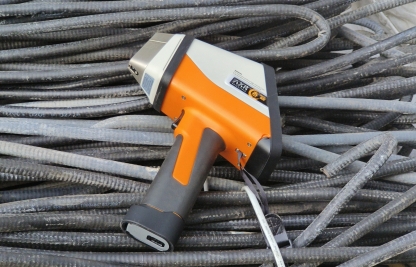
Here, I will primarily introduce the AXR Terra900 series. This series of instruments, in addition to possessing the advantages typical of most brands, is also one of the most cost-effective models available in the market. The detector employs a High-performance Si-Pin detector or an Optimized SDD detector and comes equipped with a Multi-position automatic filter changer. The detection window can be selected with a Kapton design featuring an anti-puncture window.It can detect a wide range of elements, including Ti, V, Cr, Mn, Fe, Co, Ni, Hf, Ta, Re, Cu, Zn, W, Se, Pb, Bi, Zr, Nb, Mo, Al, Pd, Ag, Sn, Sb, and many more. The instrument is highly resistant to high and low temperatures, humidity, compact, lightweight, and offers multiple language options.
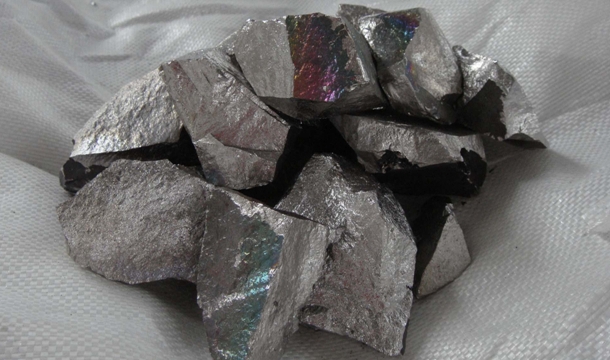
Taking the application of ferroalloy testing as an example. As ferroalloy is an important additive in the iron and steel smelting process, and its composition directly affects the quality of iron and steel products, so it is important for fast and accurate analysis of ferroalloy chemical composition is very important. Presently, “wet chemistry” is the most common method used to carry out precise analysis of ferroalloys. Yet, it has high labor costs and requires long sample preparation time.For the analysis of FeSi alloys, X-ray fluorescence (XRF) spectrometry is an ideal alternative technique, providing high throughput and simple routine sample preparation.The X-ray fluorescence analysis method has the advantages of fast analysis speed, wide detection range, stable and reliable results, etc. for the analysis of ferroalloys.For a fast sorting, samples can be prepared as powders in cups. Pressed pellets are chosen as sample preparation when higher accuracy is required but special calibrations are necessary, especially if the grain size of the sample differs from available reference samples.To avoid the influence of different grain sizes, the samples can also be prepared as fused beads. When preparing fused beads, the sample material must be oxidized to avoid damage of the platinum crucible. Standard operation procedures describe the process and list the required chemicals. With that approach even different types of ferro alloys can be analyzed with one method.Terra900 series handheld alloy analyzer can be a convenient inspection tool for element concentration analysis of ferroalloys and improves the efficiency of incoming ferroalloy material detection for steel plants.
Handheld material analyzers have transformed the way we approach material identification, providing an invaluable tool for professionals across diverse industries. With their rapid analysis capabilities, cost-efficiency, and non-destructive testing methods, these devices empower on-the-go material identification, offering unprecedented speed and precision. As technology continues to advance, we can expect even more sophisticated and versatile handheld material analyzers to meet the evolving needs of professionals worldwide. The future of material identification is undoubtedly in the palm of our hands.
 Your location:
